• Skip to primary navigation
  • Skip to main content
  • Skip to primary sidebar
GGHC

GGHC Supplement Reviews

Good Guid Health Care

  • Home
  • About
  • Best Fat Burners
    • PhenQ
    • Instant Knockout
    • Leanbean
    • Hourglass
  • Best Appetite Suppressants
  • Best Legal Steroids
    • Clenbuterol
    • Crazy Bulk Stack
    • D-Bal
    • DecaDuro
    • Testo Max
    • Trenorol

BodyBuilding

Training To Failure – Muscle Soreness and Muscle Failure

Updated on January 5, 2022 by Brad Murphy

Is working out until you can’t work out anymore a good or bad thing? We look at the science of muscle soreness and muscle failure

Muscle Soreness and Muscle Failure

This is part 2 (part 1 here) of Training to Failure – in layman terms… working out until you cannot workout anymore

Context has the final word once again.

Muscle Soreness and Muscle Failure – What Does the Science Say?

Scientific studies have attempted to compare failure and non-failure training and some have done a reasonable job at it.

I won’t slam you with a thousand study references but up until now the picture has looked something like this:

Not everyone is great at judging how close they are to muscle failure, so training to failure is a guaranteed way to ensure you are working the muscles hard enough to elicit growth.

Chronic failure training – as in, going at it every time you hit the gym – however, can cause fatigue which can hinder your overall effort and possibly dull growth.

Failure training is no more dangerous than non-failure training provided any potential problems are mitigated. In other words, it’s not inherently dangerous to train a muscle to failure, but falling over while squatting to failure is (okay that last bit wasn’t sciency).

Some studies have even completely contradicted each other in the past, where one says failure training produces better results while another concludes that it hinders progress.

So, what are we to think from a scientific standpoint?

Recently, a comprehensive study was undertaken.

Over the course of 20 weeks, 10 different training protocols – each one a unique combination repetition design – were performed by the subjects.

Muscle damage and fatigue were measured before each training session and at intervals afterwards, ranging from 6 hours to 48 hours post-workout.

Subjects performed 3 sets of bench press followed by squats. The rep protocol included 5 failure and 5 non-failure designs of different rep counts. The non-failure protocols also ranged in RPE (rate of perceived exertion).

For example, in the failure group, one subject would do 12 reps where 12 were possible. That would be a failure set. This went all the way down to a failure set 4 reps where only 4 were possible.

In the non-failure group, one subject did 6 reps where 12 were possible, another did 5/10, and so on down to one subject doing 2 reps where 4 were possible.

Muscles

Intensities (weight) was matched to the RPE and rep counts.

The results of the study were as expected, but it’s nice to have a quality investigation say as much.

High rep failure sets – particularly 10 to 12 reps – take longer to recover from than sets at 5 to 8 RPE.

Again, that sounds obvious but when you consider that the scientists measured actual physical performance as a follow-up at 6, 24 and 48 hours it bears significance that the higher-rep failure guys had reduced power compared to the non-failure subjects.

So, with that in mind, the longer recovery time could definitely impinge on volume, and therefore gains.

The study shouldn’t be interpreted as saying never do failure sets, but it was the first one to show the recovery over time following failure versus non-failure training and with different RPEs and rep counts to boot.

What would be great to see now is what recovery and progress can be made from 5, 6, 7, 8 or 9 RPE where repetitions are equal and resistance (weight) is the variable.

Training Experience and Muscle Failure

Something I’ve heard a lot is that over time, you have to train to failure more and more to continue seeing progress.

This is generally from people who have been lifting for years, perhaps 10 and over. They are talking about a widely held belief that adding muscle mass and/or making strength increases becomes that much more difficult as you become more and more experienced.

Of course it’s true. The most successful bodybuilders in the world cannot make the same gains as someone who is 6 months into regular lifting.

Training to failure appears to be synonymous with that “extra” that veteran bodybuilders are referring to.


We can’t really look at scientific data and make any meaningful conclusions in the context of lifetime lifters.

At least, I don’t know of any studies that have been able to get guys with a decade or more experience busting iron.

For one thing, the diminished returns from their training would make it very difficult to measure anything in a reasonable amount of time.

So does experience dictate how much you should train to failure? Probably, but I can’t put numbers on it.

A pro bodybuilder probably mixes it in with non-failure training in a way that’s optimal for them as an individual in terms of recovery.

These people are at the apex of their potential for muscle gains and so squeezing fractions of improvement out of their already sculpted muscles probably takes some extreme work.

For regular human beings, experience will matter but then so will individual responses to resistance training.

I know some people who can’t move the day after a gruelling leg workout and others who are back at the gym squatting.

This could be partly due to individual biochemical responses to training, but it can also be because of individual perceptions of effort.

man with muscle soreness

Muscle Soreness and Muscle Failure – Varied Perception of Effort

We’ve established what muscle failure is and it’s pretty easy to understand when you’re lifting weight.

What’s perhaps more difficult is an individual’s perception of how close they are to that muscle failure. Are they 2 reps away from failure? Or is it 3…4?

Some of us are better at it. Since it’s becoming fairly clear that we shouldn’t train to failure every time we train, due to the lengthy recovery process and the potential decrease in performance and volume, how close should we get?

It’s a good question, and one that’s often answered with: go with how you feel.

If you training program is of decent design then your overall volume – provided the intensity is adequate – is the most important factor for progress.

Once you are lifting considerable percentages of your 1RM (i.e. 60% and above), total volume is important.

Volume can be measured in total weight lifted as well as number of sets performed.

If your 1RM on benchpress is 275 lbs then if you take 70% of that and 90% of that you can still perform the same volume with 70% as you do with 90% but your likely to be much less fatigued.

That isn’t to say you should always stick to 70% of your 1RM, the point is more about related to being able to achieve your program’s volume by making the right decisions.

Perhaps later in the week, or on your last session of that exercise before you have a couple days off, you can do some failure sets.

Muscle Soreness and Muscle Failure – Leaving No Doubt

I mentioned earlier in the article that this might be the best reason to train to failure.

Taking the muscle to failure leaves no doubt as to how close you have got to maximal motor unit output and muscle fiber recruitment.

In the very least, it reassures you that you couldn’t have done more even if you tried.

Once again, if you are approaching your total volume for that muscle or muscle group for the week then it won’t hurt to use it.

How Much is Too Much?

I would say if your first sets of a training session are difficult or painful to get through because of residual fatigue/soreness from the previous session, you are overdoing it.

Actually, if it occurs over a sustained period of time, it’s a good sign that you are overtraining in general, along with other indicators like declining performance, psychological distress, sleep disturbance, lack of motivation, deteriorating physique

I and many people have found that soreness level and the length of time it sticks around are great indicators of how suited a program design is to the individual using it.

In my opinion the larger compound lifts like squats and deadlifts shouldn’t be taken to failure often, if at all.

These movement rely on so many muscles and muscle groups that working them to that point is likely to result in your form slipping, and yes, possible injury.

What’s more, given the stress these lifts place on the central nervous system (CNS), particularly the closer you get to maximum single repetition loads, working to failure can have detrimental effects that go beyond the musculoskeletal system.

Muscle Soreness and Muscle Failure – Single-Joint Movements

The single-joint movements, machine and cable exercises are more suited to putting in maximum effort. Once you’ve finished your free squats, for example, taking your legs to the pain cave on the leg press isn’t a bad thing – again, so long as the rest of your training doesn’t suffer.

By no means is it necessary or even advantageous to train to failure every time you go to the gym. Employed correctly it can be a useful addition to your program.

There are lots of options open to you as well. No-one is telling you (they shouldn’t be anyway) to do a specific number of sets to failure within a workout.

People often use it on their last set of a particular exercise. They might even combine it with a big drop set where they reduce the weight by about 30% after reaching failure and then go again, repeating the process once or twice more.

Going Beyond Failure

Muscle failure doesn’t even stop some people. They go beyond that point by performing spotter-assisted repetitions; forced and negative reps.

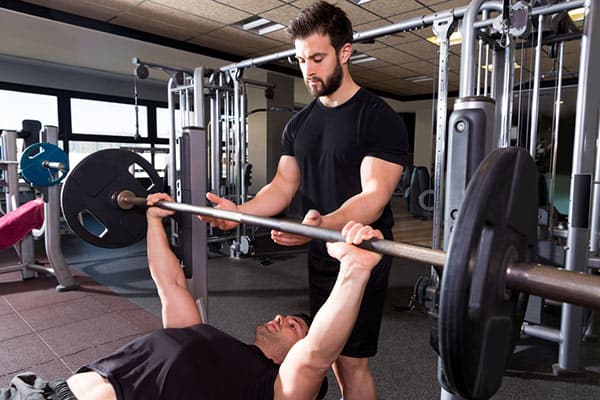
Forced reps are those which a spotter helps you complete after you have reached the point of muscle failure on your own. It’s a bit like reducing the weight but without even the pause it would take to do so.

Negative reps also require a spotter, and sometimes more than one.

These are traditionally done with weight that is heavier than the lifter can actually lift with the concentric – or positive – portion of the repetition.

It works after concentric failure as well because it’s more or less the same thing. The spotters help you lift the weight on the positive and then allow you to perform a controlled negative.

Either one of these options are ways by which you can go deeper into the pain cave. The value of them can be debated all day long, as can regular failure sets.

Main Takeaway Points

I think the moral of the muscle failure story can be summed up with the following points:

Training to failure is relatively safe, provided it does not lead to dangerous practices (like back squatting to failure away from the power rack).

It is not, however, essential to make muscle growth gains, neither is it fore strength improvements – at least not in the first few years of training.

Including some failure sets will help guarantee you are recruiting maximum motor units and muscle fibers, but this can probably also be achieved if you leave a couple reps in the tank provided you have an accurate perception of how many you have left.

Too much failure training will inhibit your ability to complete weekly volume, which is arguably more important for progress than failure sets anyway.

Strategic timing of failure sets – such as in the last few sets of your weekly volume, or before a couple days rest will help limit any negative impact they have on your overall volume and frequency

Closing Remarks on Training To Failure – Muscle Soreness and Muscle Failure

If you’re befuddled by the amount of information coming at you and you’re still not sure whether failure sets are good for your gains or not then join the club.

No-one can tell you for sure, but the science is getting better at zeroing in on the issue.

Research, bro-science, anecdotal evidence, observations, and whatever else has issued from the mouths of the wise and weird, has shown that muscle failure still has a place in a rounded training program.

Some scientists found that it enhances the production of growth hormone following a workout. Other studies show a benefit in terms of hypertrophy.

Bodybuilders have done it for years, and given the literal weight of their opinion, you’d be hard pressed to tell them they are wrong.

And if nothing else, sometimes smashing an exercise until the muscle is well and truly murdered…well, it just feels right.

Plus, the pump you get is outrageous.

Modern research is leaning more towards the opinion that it’s almost redundant, especially if it negatively affects your overall training volume…but they also say you might want to add some in just in case, you know, to make sure you’re pushing your muscles as much as you think you are.

Thankfully, there’s nothing specifically saying failure sets are useless or dangerous.

So have at it, but remember this: the deeper you go into that pain cave, the longer it takes to find your way out afterwards.

Don’t overdo it, otherwise you’re just wasting time and energy, and that’s something none of is can afford.


Dianabol (dbol) Review – Results, Cycle for Bodybuilders

Updated on June 28, 2021 by Brad Murphy

Dianabol is a steroid that is used by some bodybuilders and athletes in an attempt to increase muscle growth. Dianabol is not injected – it comes in a pill. In fact, it’s the most popular orally taken muscle-building steroid in existence.

Is Dianabol worth using

Dianabol Review – Dbol Review

Dianabol is a branded version of the anabolic steroid Methandrostenolone. It’s also one of the most popular orally take anabolic steroids of all time.

This article is describing Dianabol – it’s uses, it’s history and it’s complications. We are not providing any link to buy Dianabol nor are we condoning its use in the bodybuilding industry. Dianabol and Dbol are one and the same. We advise using a Dbol alternative

Although there is an injectable version of Dianabol as well, most users prefer to take it by mouth.

Dianabol was developed in the late 1950s and its ability to provide rapid gains in muscle mass made it an instant hit with bodybuilders. To this day, it remains a popular option with bodybuilders who wish to bulk up fast.

Dianabol bulking up
Dianabol is one of the most popular bodybuilding supplements

A Short Dianabol History Lesson

It was created in the 1950s by the American physician John Bosley Ziegler. It was originally used for boosting the testosterone levels of people suffering from hypogonadism.

During the 1960s, Ziegler decided to give the American weightlifting team an extra competitive edge at the Olympics. He used his creation to do it. As it turned out, his efforts were wasted because the team from the Soviet Union still won.

However, the American athletes were quick to notice using the steroid was making a difference to their training efforts. Thanks to Dianabol, getting bigger and stronger had become a lot easier.

It wasn’t long before Ziegler discovered some athletes were using up to 20 times the normal dose. This made him regret his earlier experiments, but the damage was done. Dianabol had become a key player in the Golden Age of Bodybuilding.

Dianabol remains a popular steroid to this day, despite the fact that it’s an illegal controlled drug.

BodyBuilder on Dianabol
It’s possible to deliver Dianabol to the body via intramuscular injections but most bodybuilders prefer to take a Dianabol pill

How Dianabol Works

One of the most important things it does is improve protein synthesis. It also boosts nitrogen retention and that’s important too.

Protein synthesis is the process where the amino acids brought to the muscles by the blood are put to work. It’s a fancy way of referring to the muscle building process.

The thing is, this “anabolic” muscle building process needs nitrogen as well as protein (amino acids). In fact, the more nitrogen there is, the more efficient the muscle building process will be.

By improving protein synthesis and nitrogen retention in the way that it does, Dianabol creates the perfect environment for maximum muscle growth.

How to Use Dianabol

It’s possible to deliver Dianabol to the body via intramuscular injections but most bodybuilders prefer to take a Dianabol pill. The preference is mostly due to the fact that the steroid is not fully broken down by the digestive process.

Bodybuilders who use this steroid often take 30-50mg per day and use it in a cycle of 4-6 weeks. However, Dianabol has quite a short half life (3-5 hours). That makes it necessary to split the dose over the course of the day.

In order to avoid the risk of stomach upsets, it’s generally best to time the doses to correspond with meals.

Some people don’t favor this method of using the steroid. They take the full daily dose at once instead and do so prior to their workouts.

Bodybuilders who use Dianabol in this way believe it enables an improved uptake of the steroid. They also argue it boosts performance during their workouts.

It seems likely that this method may provide a higher blood concentration of the steroid while working out. The problem is, taking Dianabol as a single, larger dose places a greater strain on the liver. You only have one of those and it has to last for life, so there’s a lot to be said for splitting the dose.

Dianabol Side Effects

Dianabol can do a lot of good things. There’s no denying the fact. It’s a muscle-building superstar. The thing is, it can do a lot of terrible things to the body as well. In this case, there is no yin without yang and when a steroid goes yang it’s no laughing matter.

Let’s take a look at some of the downsides to be aware of before you consider allowing the Dianabol steroid into your life.

Many Dianabol users report experiencing water retention. Nobody wants to have a lot of puffy flesh covering their muscles, but it’s not a frighting thing. It may be murder on your muscle definition, but water retention isn’t going to kill you.

Sporting a spectacular set of man boobs won’t kill you either, but it’s not a particularly masculine trait. Worrying about selecting the best training bra is a territory better suited to female bodybuilders. So, if you are considering using Dianabol, be aware doing so may leave you feeling a tit.

More worryingly though, Dbol is a steroid that can cause liver damage. This is because it’s a C17-Alpha Alkylated oral anabolic steroid. That means it can be processed by the liver without being destroyed.

Using a liver support supplement like N-Acetyl L-Cysteine may help to some extent. However, before you use a steroid like this you really need to ask yourself if the risk is worthwhile.

Other common side effects include:

  • Acne
  • Greasy skin
  • Aggression
  • Testicle shrinkage
  • Enlarged prostate gland
  • Loss of sex drive/impotence
  • Mood swings
  • High Blood Pressure
  • High cholesterol
  • Hair loss (men)
  • Increased body hair (women)
  • Cardiovascular problems
  • Suppressed testosterone production

Some Common Mistakes When Using Dianabol

A poor understanding of the steroid and it’s potential side effects increases the likelihood of harm.

Here are four of the most common Dianabol mistakes:

  1. Overdosing in an effort to rush the process
  2. Running the cycle for too long
  3. Not using any on cycle support
  4. Not bothering with a post cycle therapy

Dianabol Pros and Cons

Like the characters in a spaghetti western, Dbol can be good, bad, or just plain ugly. The big difference is, it can be all three things at once.

PROSCONS
Better protein synthesisIllegal steroid
Improved nitrogen retentionHas many potential side effects
Reduces fatigueMay cause irreparable liver damage
Increases strengthRequires post cycle therapy
Provides fast muscle gainsCompetition bans
Increases gains in overall massGains can fade quickly
 Bad for the heart
 Safer alternatives available

Is Dianabol Worth the Risk?

The power is undeniable, but so are the negative aspects its use can entail.

Unless you really know what you are doing, the potential benefits are not worth the risks involved.

Even if you have experience using steroids and know how to reduce the associated dangers, it’s still a game of Russian Roulette. That’s a game nobody should be playing. It’s pointless.

Nobody’s saying it doesn’t work, but the 60s and 70s are long gone. Steroids have had their day.

The only reason Dbol and the other mighty anabolic dinosaurs are not extinct already is too many people refuse to leave the past behind and move on.

That’s a pity because the supplement industry has evolved. Nobody needs to be gambling with their health anymore. The future is already here and there are better options available.

A Dbol Alternative

The risks are simply not worth it – especially when products exist that can you similar results by using something that is perfect legal and free from side effects.

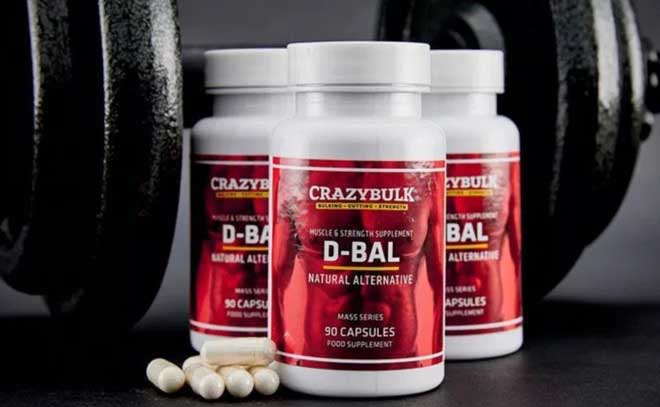
CrazyBulk have developed a range of legal steroids that have become major players in the supplement industry. Their Dianabol alternative is called D-bal and it can provide the following benefits

  • Massive muscle gains
  • Through-the-roof strength increases
  • Vegetarian-friendly legal steroid
  • Results within 30 days

You can read full review here

CrazyBulk D-bal alternative to Dianabol

Dianabol FAQ

What kind of gains can I expect?

Many users report gains of four to seven pounds within the first week. By the end of a six-week cycle, the total gains are often up to 28 pounds.

However, up to 15 percent of the added poundage may be water weight instead of muscle mass.

Can women use Dianabol?

Women can use it if they want to but it may not be advisable. Dianabol is an androgenic steroid. Women who use it run the risk of developing typical male characteristics such as a deeper voice and increased body hair.

Is a post cycle therapy really necessary?

Absolutely. It’s very necessary. Dianabol shuts down your HPTA (Hypothalamus Pituitary Testicular Axis). That scuppers natural testosterone production for a long time.

You’ll need to do a full PCT to get things back on track. Skip it and any gains you made will vanish fast. There will be a lot of other consequences as well.

What’s the difference between Dianabol and Dbol?

There is no difference. They are both the same thing. Dbol is short for Dianabol.

How long does Dianabol remain detectable?

Despite its short half life, it can remain detectable in your urine and blood for a number of weeks. Some sources say it will be evident for up to four weeks, others say six weeks.

In reality, the exact time will probably vary somewhat from one person to the next.

If you are likely to be subjected to steroid testing, the best thing to do is to stay clear of steroids altogether.

Proven Set Variations for Increasing Muscle Mass

Updated on March 2, 2020 by Brad Murphy

Proven Set Variations for Increasing Muscle Mass

Playing with sets for optimum muscle mass building.

Changing aspects of the sets you perform during a resistance training workout can help you increase your muscle mass gains significantly.

A lot of people do the same exercise, for the same number of reps, for straight sets…forever.

They do this, and wonder why they are not making the same progress as they once did. One big reason is because their muscles have adapted to the way they have been training.

Muscles do that when they get used to certain stimuli. It’s what makes them great, but it’s also what makes them

Not only does messing with set design allow you to break that stagnation, but it offers additional advantages for stimulating muscle hypertrophy.

For the sake of clarity, let’s just determine what I’m referring to when I say set.

A set is a number of repetitions of an exercise or exercises performed continuously until the next rest period.

You can manipulate sets in a number of ways. To start with I’ll cover some of the more classic sets that bodybuilders have gained a lot of success with over the years.

If you get through those and it’s nothing new to you then fear not, there will be more.

On the other hand, if you are totally new to resistance training or you are recovering from injury, then I would not attempt these sets until you have a solid base of straight set training under your belt.

For a green lifter, the point where you should start messing with sets is an individual thing. There’s no template that suits everyone. These are the bodybuilding basics.

However, if you record your progress from the start, you will see very clearly when your progress in your current program starts to stall.

The Classic Bodybuilding Sets - Adding Exercises

The Classic Bodybuilding Sets – Adding Exercises

One of the first things to do when you want to push your gains, when you’re experiencing what you think is a plateau, stagnation, or whatever, is to add exercises to the set.

These sets are basically two or more exercises performed back to back with no rest in between.

The main benefit of doing this is of course the increased training volume without adding too much additional time to the total workout.

Again, you’ve probably heard of them before, but read on anyway because there’s some useful tips for getting the most out of them.

Supersets - Increasing Muscle Mass

Supersets – Increasing Muscle Mass

When you lift a weight, you are using the agonist muscle in concentric and eccentric contraction, which is the shortening and lengthening of the muscle, respectively, under load.

The simplest example of this is the bicep curl. The biceps are the agonist in the curl movement and must contract concentrically and eccentrically in order to complete both the positive and negative portion of each repetition.

The agonist is often called the prime mover, as it is the primary muscle utilized in the exercise.

An antagonist is simple the muscle that must work in an opposing way to allow the contraction of the prime mover.

In the case of the bicep curl, the triceps work antagonistically. They actually relax to allow themselves to lengthen so that the biceps muscles can perform concentric contractions.

On the eccentric contraction, as the biceps extend under load, the triceps must contract to allow it.

Superset training is where you train both muscles (or muscle groups) in their agonist-antagonist pairs.

The superset is a number of reps of an exercise which uses the agonist, immediately followed by a number of reps using what was the antagonist, but switching it to become the agonist.

It is only once both have been completed that the set is over and the rest interval between sets begins.

A basic bicep-tricep superset might be:

A basic bicep-tricep superset might be:

  • 12 x barbell bicep curls, followed immediately by
  • 12 x cable tricep pull-downs

People often pick an agonist-antagonist pair and do three or four supersets on them. Basically about the same number of exercises they would do in straight set fashion on the single muscle group.

Doing this for one pair per workout is a great way to add an extra muscle group without the addition of much more time, i.e. just the time it takes to complete the extra reps.

Superset training is not just a time saver which allows for more volume though. The first muscle to be trained in the pair actually becomes a weaker antagonist for the second muscle.

That might seem like a bad thing but it’s beneficial to your muscle gains, because a weaker antagonist allows for a stronger contraction of the agonist.

Biceps and triceps are a beautiful example of this because there are two bicep muscles and three tricep muscles. By training biceps first in the superset, it allows for the stronger triceps to get maximal contractions, thereby increasing the resistance or number of reps you can lift.

Another agonist-antagonist muscle pair example is the chest and back. Both muscle groups are fairly large and so superset training the pecs and lats for example will cover a lot of ground, plus provide that hypertrophy benefit from added volume and second exercise power.

Guys often perform cable rows before hitting the benchpress so that they can maximize the pectoral activation.

Recommended frequency: superset training is demanding but it’s not as intense as some of the set variations I’m going to get to. However, there are some things to think about.

It may not be optimal, for example to perform biceps-triceps and then chest-back the following day. Reason being, the chest-back superset will actually utilize the triceps and biceps quite heavily anyway. If they are fatigued from the day before, they might be limiting factors in your chest and back exercises.

With all that in mind, I would give both muscle groups two days rest before you hit them again. This means you can focus on other muscles on the days between.

The most common muscle group pairings are:

  • Chest and Back
  • Biceps and Triceps
  • Quads and Hamstrings
  • Shoulders and Lats

People find different combinations to work. Some focus on supersets for a limited period of time, while others add them in to their program on a regular but less intense basis.

Personally, I like to add a couple supersets in to my training per week, with one upper body and one lower body pairing.

man bench pressing

Compound Sets – Increasing Muscle Mass

Compound sets are also two back-to-back exercises with no rest in between but both are done on the same muscle group, rather than agonist-antagonist pairs like in supersets.

You can either:

  • Use the same part of the muscle group in both exercises; or
  • Target two different sections of the muscle group

A tactic often used is to perform a multi-joint lift (aka compound movement) and then immediately follow it with an isolation exercise.

Examples include:

  • Bench press with dumbbell fly
  • Shoulder press with lateral raise
  • Squats with leg extensions

Other methods used include:

  • Barbell exercises followed by dumbbell exercises
  • Free weight exercises followed by machine exercises

A benefit of doing compound sets is of course the added volume without much added time. Much like supersets.

When you are trying to hit a particular muscle group harder to stimulate a greater growth response in the days following, there aren’t many better exercises than compound sets and tri-sets and giant sets (I’ll get to those in a bit).

Compound sets are more intensive than supersets thought because you are focusing the entire set on one muscle group, sometimes on one muscle.

There’s only one way to make up for the added energy you expend and that is in the recovery process.

These sets are therefore best used only occasionally and/or for short stretches. The longer you use them for, the more at risk you are of over-training.

I will stop using compound sets at the first sign of unusually high tiredness over the course of a couple of regular days.

Also, you should consider adding time to the rest interval between workouts of the same muscle group. Some people wait up to a week before training the same muscle group again after they have hit it with compound sets. Others only need 3 days rest but for them it is still an increase.

Find your pattern.

Tri-Sets and Giant Sets – Increasing Muscle Mass

Compound sets aren’t limited to two exercises like supersets are. Tri-sets and Giant sets are basically just bigger compound sets.

At the risk of stating the obvious, tri-sets are sets where you perform three exercises on the trot with no rest intervals in between them.

What’s cool about tri-sets is that you can do three sets and hit an entire small muscle group, without the need to add on some straight set exercises afterwards.

Your triceps are a great example because there are three of them and you can perform a nice, quick transition between the exercises to hit the long-head, lateral head and medial head of the group.

Giant sets are four or more exercises performed on the bounce. They are perhaps better suited to the larger muscle group, but can be performed on smaller groups provided lifting form doesn’t suffer.

In fact, that piece of advice goes for any of the compound set variations. If your form starts to slip during any part of the set then I would suggest that your rep counts are too high, or you are simply not ready for that intensity of exercise yet.

Make sure you can cope with the intra-set endurance required before you attempt trisets and giant sets. If you are used to hitting straight sets on the shoulders, for example, then jumping into giant sets might not work out for the best because you don’t have the stamina to really get the most out of it.

Increasing Exercise Intensity

The increasing exercise intensity and set volume from two exercise compound sets up to giant sets would be best approached in congruence with your experience level.

This will help you to avoid over-training, injury and program failure, as you will be confident in your strength and skill, despite the sets still pushing you physically.

As you stuff more exercises into your compound sets, your frequency and period of training them should be less and shorter respectively.

Not only will this reduce the likelihood of overtraining, fatigue and failure, but it will help you recover better and in fact grow more from the training stimulus.

Basically, the more energy you put into the process, the longer your body needs to recover and overcompensate afterwards.

One muscle group particularly suited to giant set training is the abdominal muscles. There are many variations of exercises, utilizing bodyweight, free-weights, cables and other machines that can target different sections of the abs.

Also, due to to almost constant use of our core, the abdominal muscles are used to being engaged frequently and for extended periods. Thus they have a high recovery rate, between both sets and workouts.

Giants sets are therefore a great way to work the core deeply and stimulate maximum growth by interrupting that fast recovery time with back-to-back exercises.

Things to Bear in Mind – Increasing Muscle Mass

Additional volume and intensity means additional stress. Supersets and all variations of compound sets should be used infrequently and for short periods of time to get the maximum adaptations from them.

There are a few ways to work them into your program, and over time you will become accustomed to what works for you.

Some people add one or two set variations into every workout for a period of time, targeting different muscle groups each session. This works because no one muscle group becomes overly fatigued over the course of a few weeks.

For example, if Monday is your chest day and arms day, then you could probably do a superset for your arms and a compound set for your chest. On the other hand, you could do straight sets on your chest and then tri-set your triceps to really finish them off. The following week, you could tri-set your chest and straight set your triceps.

This would allow both to recover adequately for the next chest/arms day the following week.

Another possibility is using set variations to bring a lagging muscle group up to the same standard as the rest of your physique.

Compound/Super-Setting

This can either be done by compound/super-setting that muscle group every week for a few weeks and training the rest as normal.

A strategy that has worked well for me is adding a workout for that muscle group within the week’s program and using set variations then.

For example: if I feel a muscle group is lagging, such as my back, then I will simply add another back workout to my weekly program so that there is only 2/3 days between each back workout.

Supersets are great for this because you can superset your back with your chest on chest day and then carry out back day as normal a few days later.

To take it to the next level, you could dedicate an additional workout to the lagging muscle group – the back in this case – and do compound sets on that additional day while training it as normal on the regular back day.

Again, it will take some experimentation to see whether this is actually beneficial to your muscle growth response, or whether it fatigues you more and ends up being detrimental.

The more you focus on one muscle group, the more you have to be wary about the length of time you train for, both within the session and on a week by week basis.

Experience, fitness level, diet, sleep and general activity level in your life will dictate much of what you can achieve, and there is no point in me saying ‘do this for 4 weeks for the best results’ because no program fits all.

Somebody who has a very physical job, for instance, should not be attempting multiple giant sets per week unless they are mitigating the energy usage elsewhere with nutrition and additional hours of sleep.

What I’m saying is: as you invest more energy into your program, another factor of your life must give some back to retain the balance and prevent you from experiencing the negative effects of over-training.

Training to Failure – Training a Muscle to Failure

Updated on November 24, 2021 by Brad Murphy

If you repeat the same exercise on the same set of muscles you are likely to experience muscle failure. Trust me you don’t want to experience muscle failure!

Training to failure is repeating your specific exercise or workout to point where your muscles fail.

Training Your Muscles to Failure

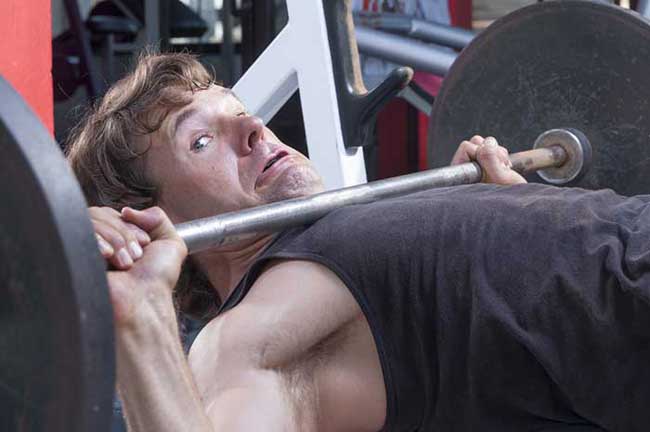
Typically, you just cannot muster the strength for one more bench press.

Take a look around a typical gym full of bros and you’ll see a lot of them squeezing out their best pain face as they crank out the last few reps of their set.

That often means they are taking the set to muscle failure, otherwise known as the point when your muscles just won’t do another rep, no matter how strong your mind-muscle connection is.

Many of the same bros would tell you that training to failure is the best way to grow muscle. Some of them will say it’s the only way to grow muscle.

In fact, this has been the edict of many a professional bodybuilder over the years.

And who can argue with the very people who should absolutely know how to grow the biggest muscles, considering they have the largest muscles in the world?

But, is it necessary to do it every time your train? Should you take each muscle group to failure on each set? How many times should you do it a week? and is there an advantage to leaving some reps in the tank?

I’m going to cover all the answers to those questions, and possibly more. I’ll discuss some fancy research that’s put this very subject to the test, and I’ll provide you with some cool advice that you can immediately apply to your training in order to get more out of it.

Must Read: Build, repair, and recover faster with Crazy Nutrition’s TRI-PROTEIN formula. Made with 6 natural, non-GMO proteins that break down in 3 phases for more energy and strength than regular whey, hemp, or soy protein formulas

First, let’s start with the basics.

What is Muscle Failure?

Within the context of resistance training, it’s the point when your muscle/s can no longer generate adequate force to overcome the resistance and perform even a partial concentric contraction.

You can't budge it when your muscles fail!
You can’t budge it when your muscles fail!

In other words; you can’t move the weight an inch.

Muscle failure is technically temporary, and might be called momentary concentric failure in pretty books about bodybuilding and strength training.

It’s temporary because you should be able to perform more contractions with the same load after you’ve taken a breather.

In fact, this momentary nature of muscle failure has led to many different set designs being thought up over the years, from the rest-pause method to completing multiple back-to-back drop-sets to failure.

What’s Good about Training to Muscle Failure?

Exhausting your muscle, sometimes repeatedly in a short space of time, has been used to improve rates of muscle protein synthesis and muscle hypertrophy – i.e. growth in terms of size and mass – for years.

Basically, the idea is that by working a muscle to its point of failure makes sure that as many motor units and thus muscle fibers as possible are recruited to keep moving the load.

That’s because as more and more of the initial fibers that were engaged at the start of the set become fatigued, the muscle needs more to help it generate the same total muscle force.

That in turn means that more muscle fibers are stressed under load, providing the stimulus for the supercompensation/growth that happens in the post-workout recovery stage.

Going to failure essentially ensures that no more of the muscle’s fibers could have been recruited.

That concept of leaving no room for doubt might actually be the only reason to train to failure, and I’ll get into why that is a bit later.

What’s Bad about Muscle Failure?

What’s Bad about Muscle Failure?

Longer recovery, decreased frequency, decreased volume, reduced intensity and higher probability of injury.

Okay, that sounds really bad, but it all makes sense when you think about it.

Longer Recovery

Training a muscle to failure implies a heavy reliance on anaerobic respiration and therefore lactate.

One can only work the muscle using lactate as an energy substrate for so long until muscle acidity rises to the point where it is too high for the conversion of glucose to occur at effective rates.

This acidity is commonly known as lactic acid, and it’s why our muscles fail.

Lactic acid is a good thing though because it prevents you from simply working the muscle until it wastes away. It’s a defence mechanism.

However, it causes soreness in the muscle, often proportional to how far you took your training. This can extend the recovery period of the muscle tissue, which can have knock on effects to your training.

Muscle failure is not a great experience

Decreased Frequency

Of course, if a muscle or muscle group takes 4 days to recover instead of 2 because you ventured deep into the pain cave last time you trained, it can affect the frequency by which you can train.

Most trainers and coaches these days advise that you don’t train if you are sore. Obviously the whole situation varies from one individual to another, but soreness – sometimes referred to as delayed onset muscle soreness (DOMS) – is a good indicator for when you should train a body part again.

Light soreness is not really an issue but if the pain causes reduced function of the muscle it is probably best to let it rest some more as it is still recovering, growing and strengthening.

I’ll talk about soreness in more detail in a while. For now, suffice to say that it plays a role training frequency.

Soreness aside, the reduced capacity of muscle tissue following an intense lifting session can reduce training frequency. Simply put, you want to avoid overtraining because it can have many negative impacts, both in the short term and down the road.

Decreased Volume

From decreased frequency, a decrease in training volume is a definite possibility.

Weekly training volume is defined by the number of reps and sets you do in the seven days. Reduce the frequency and you can reduce the overall volume unless you increase the volume per workout to compensate.

That’s fine of course, and often part of the natural course of progressive overload. Progressive overload doesn’t always have to mean adding weight to the bar. It can also involve adding another set, say to your squat routine.

Training to failure too often can disrupt that progression.

After all, something has to give if you’re cooking the muscles to failure but trying to pump out the same volume and frequency as you would do if your sets actually left some reps in the tank.

That something can be training intensity, or the health of your joints, muscles and connective tissue.

Decreased Intensity

Generally speaking, if it takes more effort to lift the same weight for the same sets and reps as you did in your last workout, something is going wrong.

I say ‘generally speaking’ because sometimes there are understandable reasons for this, such as during cutting cycles, acute fatigue, nutritional timing etc. or any other short-term issue.

Intensity – at least in the context of bodybuilding – refers to the amount of weight your are lifting. It’s often referred to as a percentage of your 1RM (one rep max). And again, in general, it should increase for a given volume and frequency over time.

If training to muscle failure is preventing this increase from happening, or it is even causing your intensity to decrease, then it’s most certainly time to re-assess how often, or when, you are doing those failure sets.

Decreasing either of the other factors – volume or frequency – in order to maintain intensity is just as bad.

Increased Risk of Injury

Increased Risk of Injury

This shouldn’t come as a huge surprise but weakening muscles by training them to their point of failure can heighten their potential for injury.

The risk of injury when lifting weights is extremely low, especially compared to other sports, as long as you are aware of your body’s capabilities and limitations.

Important Counterpoint

It’s worth noting that none of these points are inherently negative until they have a negative effect.

If that seems like I’m stating the obvious then let me use an example to explain: if training to failure reduces your overall volume, it’s only negative if you are set back in your progress as a result.

In fact, I’ve often heard people explain that reducing volume and adding some failure sets in is what broke them through a plateau. Ultimately, progress can be attributed to a combination of all the factors, and much of that is down to the individual.

Even the perceived increased risk of injury that’s associated with concentric muscle failure is theoretical. There’s no reason to assume the risk of injury is greater unless when it has been accommodated for.

For example, someone who performs free-weight back squats to failure in the open, nowhere near the safety bars of a power rack, is putting themselves vastly more at risk than someone doing arm curls to failure on a cable machine.

You can read part two here – Training To Failure – Muscle Soreness and Muscle Failure

Clenbuterol for Cutting Cycles and Fat Loss – Is Using Clen Worth the Risk

Updated on January 1, 2022 by Brad Murphy

Is Clen good for cutting cycles? Clenbuterol is used by bodybuilders who want to cut body fat and people in general who want to lose weight. But is it safe, is it legal, does it really, is it worth the risk?

Clenbuterol is a powerful fat-burning supplement
Clen for cutting cycles – is it worth it?

Clenbuterol Review

Clenbuterol (also shortened to clen) is a powerful fat-burning supplement that is often mistaken for a steroid.

Bodybuilders favour its use during cutting cycles and many celebrities use it to stay in shape. It’s highly regarded for its ability to burn fat and retain muscle.

This article is written objectively about Clenbuterol. We are not advising to buy Clen nor are we recommending its use for bodybuilding – it can cause side effects.

There are however alternatives that can be used for fat loss and cutting. Alternatives that are safe to use and will give you the the benefits but not the risks. Click here to view pricing on Clenbutrol – effective legal alternative

However, let’s get a few things straight right from the start.

First of all, Clenbuterol is not approved for human use in the USA. Although it can be used for treating asthmatic horses, it cannot be used on any animals intended for human consumption. [1]

In certain countries of the world it’s approved for treating humans with asthma, but its use is not sanctioned in other areas.

Apart from being a powerful fat burner, Clenbuterol is also a performance booster. Many notable athletes, including the German sprinter Katrin Krabbe, have been hit with competition bans due to its use.

Due to its addictive nature and many side effects, it has been labeled “Hollywood’s Dangerous Weight Loss Secret”. [2]

However, although initial results can be shockingly good (up to 20lbs per month) the fat burning ability of Clenbuterol can diminish with use.

Recommended Article: Did you know there are supplements that work like that steroids that are totally legal, safe and natural!

fat loss

What is Clenbuterol?

Clenbuterol belongs to a class known as beta2-adrenergic agonists.

Supplements of this nature are stimulants that affect the body in many different ways. Their ability to open up the bronchial passages makes then useful for treating lung diseases such as asthma and bronchitis.

Clen was initially developed during the 1970s and was used for treating racehorses with breathing difficulties.

It has also proved to be useful as a fat burner for cattle. Its ability to burn fat and improve muscle can improve the quality of the meat.

US law forbids the use of Clenbuterol on animals intended for human consumption.

However, when bodybuilders learned of clen’s abilities they began using it as a performance enhancer and fat burner.

Key Benefits

  • Rapid fat burning
  • Retains muscle mass
  • Boosts energy to provide a superior workout

How Clenbuterol Works

One of the things beta-2-agonists like Clenbuterol do is increase adrenaline production. This stimulates a slight elevation in body temperature.

This elevation does two things. First of all, it causes extra energy (calories) to be lost from the body into the atmosphere as heat.

Secondly, it increases the metabolism. This causes the body to burn calories faster than normal. When the body grows short of calories it begins burning fat for energy.

The problem is, the kind of calorie deficit that is necessary for fat burning usually results in some loss of muscle mass as well. Clenbuterol is valued for its ability to support fat burning while preventing this from happening.

Additionally, it also boosts energy and provides appetite suppression. With abilities like these, it’s easy to understand how it became so popular. However, the fact remains it is both dangerous and illegal to use.

Fortunately, recent advances within the supplement industry mean better, safer options are available.

How to Use Clenbuterol

When it’s being used to treat the symptoms of asthma, the normal dose is 0.02 and 0.03 mg per day.

However, when people are using Clenbuterol to burn fat or enhance physical performance they tend to use a higher dose. Typically 0.06 and 0.12 milligrams per day and use it in a six or 12-week cycle.

There are three versions available:

  1. Pills (Can be dangerous for your liver)
  2. Liquid (Difficult to get the dose correct)
  3. Injection (may cause scarring and air bubbles in the blood)

The pills are the most popular.

If you are seriously thinking of using Clenbuterol for fat burning or bodybuilding reasons there are a few important things to bear in mind.

First of all, using it is illegal. Secondly, there is a risk of side effects and you may damage your health.

Finally, it is totally unsuitable for anyone who is pregnant, has a heart condition or other serious health issues, or has a BMI of 25 percent or more.

Clenbuterol Side Effects

Too many people get so caught up in the good things Clenbuterol can do they ignore the fact that it can also hit you with some serious side effects.

Like a lot of other stimulants, Clen can give you the shakes. Especially in the hands. Depending on your work, this can put a nasty dent in your ability to function in a productive way.

If you need to do intricate tasks, work with sharp implements, or operate heavy machinery, Clenbuterol is going to be an especially unwise option.

A lot of people who use Clen also experience headaches. This is not surprising though. Using clen can push your blood pressure through the roof.

High blood pressure is a pretty serious consequence as it is because it puts a strain on the entire cardiovascular system. However, Clen can be extra unfriendly to the heart by causing palpitations and atrial fibrillation (abnormal heart rhythm).

Atrial fibrillation interferes with the heart’s ability to pump blood efficiently. Using Clen can also lead to cardiac hypertrophy. When this occurs the heart increases in size. Neither of these things are good for your life expectancy.

Other Clenbuterol side effects can include:

  • Depression
  • Stress
  • Anxiety
  • Dehydration (due to excess sweating)
  • Difficulty sleeping
  • Diarrhea
  • Dry mouth
  • Nausea/vomiting

Additionally, Clen can also be highly addictive.

All things considered, the risks involved far outweigh any value clen offers. That’s why it’s so good that safer alternatives are now available.

Clenbuterol Pros and Cons

PROSCONS
Provides rapid fat lossIllegal
Protects existing muscle massCompetition bans
Increases energyCauses many side effects
Provides a better workoutPresents many dangers
Improves physical performanceAddictive
 Safer alternatives available

Is Clenbuterol Worth the Risk?

There are mainly three different types of people who find clenbuterol attractive.

Bodybuilders, athletes, and people who wish to lose weight. In all cases, Clen is not worth the risk. If you doubt that, go back and take another look at the list of potential side effects.

It’s all too easy to cross your fingers and hope you’ll get lucky, but what if you don’t?

Admittedly, plenty of people do take a chance and win, but it’s still a game that’s being played with a loaded gun.

Taking such chances is also as unnecessary as it is foolhardy. No matter how great the desire to lose fat and look good, there are better ways to do it.

There are legal options that can match Clenbuterol’ abilities without presenting any known health risks at all.

Bodybuilders and competing athletes also have an additional risk to consider. Clen can remain detectable for quite a long time. Many athletes have found this out the hard way.

Clenbuterol FAQ 

Can women use Clenbuterol?

Women can and do use Clenbuterol, but that does not mean it’s a good idea to do so. Regardless of sex, there can be side effects involved. It can also be addictive. In fact, according to media sources, Britney Spears became addicted to it. Side effects and addiction are too high a price to pay just to look good.

What’s the difference between Clenbuterol and Dilaterol?

They are the same thing. Clenbuterol is the generic name. Dilaterol is a brand name. Spiropent and Ventipulmin are also brand names it is sold under.

How long is the maximum usage cycle?

People who use clen should not be doing so for any longer than 12 weeks.

Do you still need to diet and exercise to lose weight with Clenbuterol?

Lots of people will tell you that clenbuterol can burn fat without the need for diet and exercise. However, this is not true.

If you are only looking for something to help you to lose weight and think Clen will allow to you sit on the couch all day, eating potato chips, and still lose weight get ready to be disappointed.

How good is it for appetite suppression?

Like other stimulants, Clenbuterol offers a mild appetite suppressing effect. It will curb your desire for food a little, but it’s no great guns in this regard. If you are primarily looking for appetite suppression, you need to look elsewhere. 

Will I need to do a PCT?

Clenbuterol does not suppress normal testosterone production, so there is no need to do a post cycle therapy.

Some people actually incorporate the Clenbuterol into their PCT after they stop using other steroids. The idea being that it will help prevent muscle wastage.

Muscle Hypertrophy Explained – Myofibrillar and Sarcoplasmic

Updated on June 8, 2021 by Brad Murphy

muscle hypertrophy

Muscle hypertrophy = the increase in size of skeletal muscle via growth of its component cells.

It’s important that you understand at least the basics of the two ways in which your muscle fibers grow. They are:

  1. Myofibrillar Hypertrophy
  2. Sarcoplasmic Hypertrophy

You’ve probably seen diagrams of muscle fibers in cross-section. Imagine a pipe with smaller cables running through it and you’re most of the way there.

The cables represent the myofibrils and the space between them represents the sarcoplasm.

What Are Myofibrils?

Myofibrils – the cables in our pipe metaphor – are long chains of contractile proteins. They are responsible for the actual contractions of muscle fibers, for example when you lift a weight in the gym.

Myofibrillar Hypertrophy is therefore the growth in size and quantity of the myofibrils within the muscle fibers.

It is often said that myofibrillar hypertrophy directly corresponds to increased strength and maximum force output.

Training specifically and regularly with heavy weight (near the one rep max – 1RM – weight) is known to trigger myofibrillar hypertrophy.

What is the Sarcoplasm?

Going back to the pipe visualization, the sarcoplasm would be the areas between the cable-like myofibrils, except that the sarcoplasm is not empty space.

It is in fact much like the cytoplasm of the cell, which is comprised largely of the gel like substance that surrounds the nucleus.

You can think of the sarcoplasm as the softer “gel-like” substance surrounding the tougher, “rope-like” myofibrils.

Sarcoplasmic Hypertrophy can therefore be thought of as the enlargement of the sarcoplasm, or growth of the sarcoplasmic volume.

It can be assumed that sarcoplasmic hypertrophy directly corresponds to increased size of muscle fibers, and thus whole muscles.

There have been different theories offered as to the main purpose of sarcoplasmic hypertrophy.

You will find one generally accepted theory is that it increases the volume for muscle glycogen storage. Glycogen is basically globs of glucose, and a major source of energy.

For experts, the glycogen storage theory doesn’t paint the whole picture. The sarcoplasm is also a protein reservoir.

Expansion of the sarcoplasmic protein reservoir is probably a more logical explanation for sarcoplasmic hypertrophy, with increased glycogen storage being a concomitant or resultant benefit.

Training specifically for enhanced muscle size involves a lot more sarcoplasmic hypertrophy, and thus “high volume” training.

This usually means employing lower weight than specific strength training, but with higher reps, or “volume” sets, often to muscle failure.

Bodybuilders strive for aesthetic perfection

Strength versus Size Argument

Training predominantly for muscle size, i.e. bodybuilding is regarded by many as involving the growth of a lot of non-functional muscle mass.

That is to say a bodybuilder has huge muscles but can’t lift as much as someone much smaller who has trained as a powerlifter or weightlifter.

Physique goals are different as well. Bodybuilders strive for aesthetic perfection, muscle balance and symmetry, whereas powerlifters, weightlifters and strongmen train almost purely for strength and increased force output. Some bodybuilders turn to supplements to add muscle or burn fat, some turn to using steroids. The latter is bad idea for many reasons – unless they belong to the new breed of legal steroids – bodybuilding supplements that work like steroids but are safe and legal.

As such, the latter group tend to build physiques functional to their discipline or multi-discipline sport.

It follows that a bodybuilder has more sarcoplasmic volume and less myofibril density than a pure strength athlete.

The Skill Component

Much of a strength athlete’s ability to lift heavier weights than a bodybuilder is actually down to practice, and hence skill.

Powerlifters are regularly lifting weights that are high percentages of their 1RM (one rep max – the maximum weight they can lift for one rep only).

Furthermore, they use less movements than a bodybuilder because they strive primarily for the functional necessities of the sport.

By contrast, a bodybuilder must train every muscle of their body in various ways to grow each one to its maximum size.

So, where a strongman will squat, deadlift, pull, press and bench heavy weight in big compound movements, a bodybuilder will do that with moderate weight as well as working on all the satellite muscles of the smaller muscle groups.

Basically, the skill of regularly lifting bigger weight has a huge effect on the ability to do so.

Here’s an excellent article on the science of sarcoplasmic vs myofibrillar hypertrophy if you don’t mind getting into the technical stuff.

Mutually Beneficial but Not Mutually Exclusive

It turns out that sarcoplasmic hypertrophy is probably an inevitable function of resistance training. Whether you’re particularly aiming for size or not, there will be some increase there no matter what – after all, powerlifters aren’t exactly small.

The same can be said for myofibrillar hypertrophy. Of course someone who wants to get massive has to increase their strength significantly.

Bodybuilders also find it very easy to switch to all-out strength when they want to. Using the earlier metaphor again; this could be because they’ve built their pipes bigger, and so they can pack more cables in by changing up their training style.

If sarcoplasmic hypertrophy expands the sarcoplasmic protein reservoir then it stands to reason that this would serve the myofibrils well, if not providing direct functional strength in and of itself.

The non-contractile proteins in the sarcoplasm are heavily involved in anaerobic metabolism, which bodybuilding training relies on to a large degree.

Volume sets where the muscle tissue is worked way past lactate threshold and into the pure anaerobic zone would benefit greatly from increased sarcoplasmic proteins.

Sets of 3 or 4 reps with heavy weight you’re mostly remaining in the aerobic zone and using muscle creatine and phosphocreatine stores for energy. The sarcoplasm therefore doesn’t need to be as expansive if strength sets make up the habitual training regimen.

Summary – How Can I Use This Information?

Most people reading this won’t want to compete for the Mr. Olympia title, or indeed become the strongest man in the world, anytime soon.

The differences between sarcoplasmic and myofibrillar hypertrophy are important to understand because it gives you an idea as to how you should train for specific physique and strength targets.

I recommend a mixture of strength and volume training in order to get best of both worlds: functional and aesthetic.

In my opinion, sarcoplasmic hypertrophy shouldn’t be viewed as non-functional muscle growth because it obviously provides an energy pool for the muscles to tap into during anaerobic exercise.

Personally, I put more emphasis on strength training for myofibrillar hypertrophy because it provides a platform of stability and functionality, while helping to prevent injury and chronic exhaustion as you progress.

To get really big, you will need to lift heavy weight regardless of the weight’s proportion to your maximal output. Bodybuilders might squat, press and bench less weight than a pure strength athlete, but they still lift ridiculously heavy weights compared to the average person.

My advice: don’t choose between size or strength. Take the best of both.

Click here to read about the different muscle fiber types and what you should know as a lifter

  • « Go to Previous Page
  • Page 1
  • Interim pages omitted …
  • Page 5
  • Page 6
  • Page 7
  • Page 8
  • Go to Next Page »

Primary Sidebar

Trending

PhenQ new

PhenQ Review – Multi Action Supplement that Burns Fat and Suppresses Appetite

muscle hypertrophy

Muscle Hypertrophy Explained – Myofibrillar and Sarcoplasmic

Strength Training for Bodybuilders – Starting Out

Training for Strength Gains

Training Specifically for Muscle Size, Mass and Bulk

Bodybuilding is an art, a science, a philosophy and a discipline all in one.

Bodybuilding Basics – Nice Bod, to Magazine Model, to Mr. Olympia

Categories

  • Advice
  • BodyBuilding
  • Ingredients
  • Legal Steroids
  • Male Enhancement
  • Nutrition
  • Pre-Workout
  • Reviews
  • SARMs
  • Sexual Health
  • Testosterone
  • Training
  • Uncategorized
  • Weight Gain – Mass Gainers
  • Weight Loss Supplements

Copyright © 2026 | This website (gghc.org) should only be used as an entertainment and education resource and should not be used to self diagnose or as a medical diagnosis. All information published are the views of the author, contributors and commenters; and do not necessarily reflect the views of this website’s owners. All content written is subject to copyright. All images are licensed or original and should not be used without consent from the owner of the image rights. All videos are copyright. All product reviews are the views of the reviewer and do not necessarily reflect the views of this website’s owners. All advertisements are compensated. There may be affiliation between author and product and some compensation may occur.

  • Privacy Policy
  • Terms Of Service
  • Facebook