• Skip to primary navigation
  • Skip to main content
  • Skip to primary sidebar
GGHC

GGHC Supplement Reviews

Good Guid Health Care

  • Home
  • About
  • Best Fat Burners
    • PhenQ
    • Instant Knockout
    • Leanbean
    • Hourglass
  • Best Appetite Suppressants
  • Best Legal Steroids
    • Clenbuterol
    • Crazy Bulk Stack
    • D-Bal
    • DecaDuro
    • Testo Max
    • Trenorol

Brad Murphy

Which is Better Creatine or Beta Alanine? Is it Fair to Compare?

Updated on June 30, 2021 by Brad Murphy

Creatine and Beta Alanine are often compared. Is it fair to analyze their differences though? Although similar they are responsible for different workout benefits.
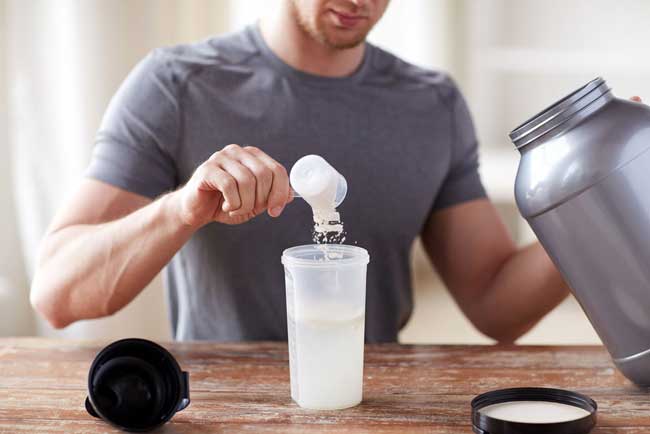
man using creatine and beta alanine

Creatine or Beta Alanine?

Although similar, it is wise to note that creatine helps with short, intense bursts of power, while beta alanine can prevent lactic acid from getting into your muscles and making you fatigue more during your workouts.

Firstly I am going to give an overview of Creatine and what it does.

Creatine Monohydrate is the Granddaddy of strength supplements. If you ever meet anyone who tells you to avoid creatine, find a computer, google ‘moron’…and then smack them over the head with the keyboard.

I jest (but not really).
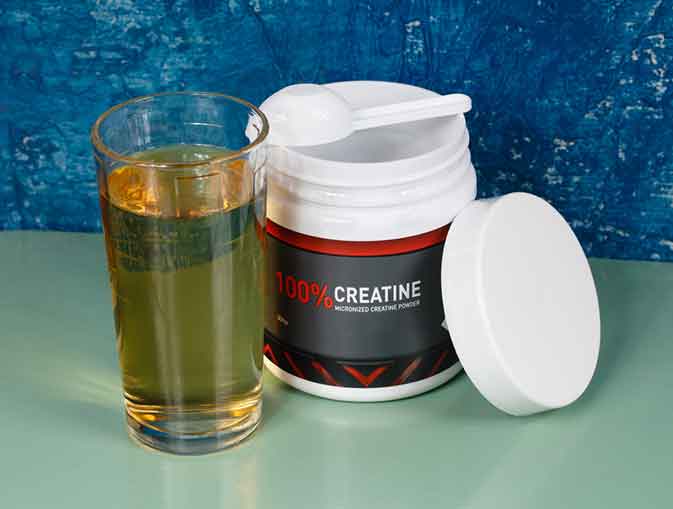
Creatine best supplement
Creatine – arguably the go to supplement for strength

Once upon a time, I was asked to review a product – for the sake of anonymity, let’s call it SuperCreatine.

SuperCreatine was a “nitric oxide booster” in capsule form, and one of the “benefits” they listed in the marketing hype was “Creatine Free!!”

Not only would SuperCreatine fail to raise the nitric oxide levels of a growth-stunted dung beetle, but the manufacturers thought its distinct lack of creatine was a selling point.

My review was honest. They didn’t send me any more free crap.

Creatine and Phosphocreatine for ATP Cycle

Creatine occurs naturally in your body. It’s synthesized in your liver and kidneys at a rough rate of 1 gram per day.

It’s also partially replenished via your dietary intake, which can provide another single gram per day.

Those 2 grams play a pivotal role in the recycling of ATP (adenosine triphosphate) from ADP (adenosine diphosphate).

It does this by being converted to phosphocreatine once it reaches the muscles or brain, and donating phosphate groups when ADP needs to be phosphorylated back to ATP.

It’s a phosphate donor.

Most of your creatine stores are in your skeletal muscle as phosphocreatine. Some is in your brain, floating around in your blood, or in other organs and tissues.

ATP is the principal energy molecule in your body, and for all life as we know it. It’s more like a broker though, acting as an intermediary between stored energy and processes that require it.
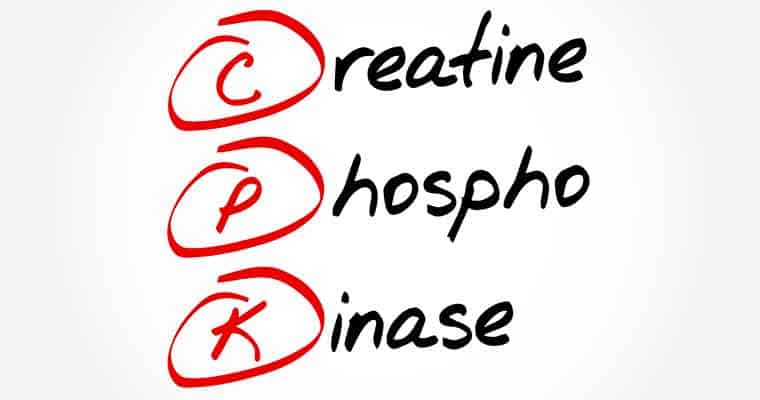
creatine phosphokinase

Creatine Monohydrate and Saturating Your Cells

Here’s the fun part about: you have room to store much more than you synthesize or obtain from your diet.

The two gram turnover that I talked about in the section above is satisfactory for people who don’t engage in anaerobic resistance training regularly.

However, if you lift, and your sets often go into the red, your creatine stores can be quickly depleted as phosphate groups are donated faster than they can be replenished.

So, if you take an appropriate dose on a daily basis, not only will it mitigate your energy deficit problem, it will eventually saturate your cells.

Saturation provides your muscles with a reservoir of phosphocreatine to recycle enough ATP for your daily gym shenanigans.

What Can Creatine Do For You?

Let’s put some numbers on this, shall we?

A meta-analysis of creatine studies found that creatine supplementation adds:

8% to the user’s Squat strength

3% to the user’s Leg Press strength

Another meta-analysis showed improvements in Bench strength and lean body mass.

The type of training it helps with is short bursts of force output that go into anaerobic respiration.

Anything less than 30 seconds is where creatine is at home, i.e. most mass/strength building sets.

Some efforts lasting between 30 seconds and 2.5 minutes can also benefit from creatine supplementation, like a volume set of squats for example.

Effects become unreliable for efforts lasting longer than two and a half minutes.
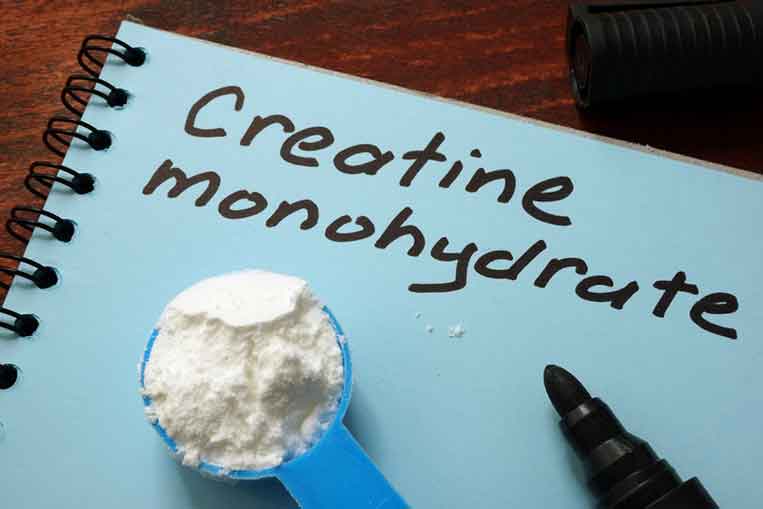
Creatine Monohydrate best supplement in the world

What About Different Forms of Creatine?

Creatine monohydrate (CM) is the cheapest form of creatine. Companies can no longer make oodles of profit from CM, so they had to shake up the business and make some fancy sounding creatines.

The thing is, CM provides the closest to 100% absorption out of any type of creatine.

Also, those creatine powders mixed with something for “ultra fast absorption” are missing the point. Creatine doesn’t need to be absorbed super fast.

All you have to do with CM is build it up to the point of cell saturation. When you work out, you use some of it, and the next time you take a dose, you just top up your creatine pool.

Absorption speed is irrelevant. And spending more money to get it is silly.

The only concession I have made is to buy “micronized” CM, because it mixes better with my protein shake.

Should I Cycle Creatine?

There’s no real point in cycling creatine. If you come off it, you’ll only have to re-saturate your cells again when you go back on it.

There’s no safety concern with using creatine long term at the doses recommended below.

How Much Should I Take and What About Loading Doses?

Between 3 and 6 grams per day appears work out for most people. Taking this amount will slowly saturate your cells but you should still have a surplus to requirements during the saturation phase.

Loading creatine by taking 20 to 25 grams per day (split into four or five separate doses to be easier on the stomach) for about five days will help you reach saturation quicker.

Loading can increase the water retention effect (creatine initially pulls water into the muscles), and high doses can cause mild stomach cramps…plus, there’s no real need to load.

Personally I throw 5 grams into my post-workout shake.

Job done.

Is Creatine Safe?

Remarkable so. Some old studies were super cautious about creatine so you might read that the long term effects are unknown or that it might tax the kidneys.

Long term use of high doses of creatine are still unknown because nobody is dumb enough to take large doses for years, because it’s not necessary. Five grams a day is fine.

Some people should avoid loading creatine just in case. They include (and might not be limited to) people with high blood pressure, people with reduced kidney function.

That’s Creatine covered in a very concise manner – let’s talk about Beta Alanine.

What is Beta Alanine?

Do you know what beta-alanine is doing inside your body when you take it? Is it necessary to take it before a workout? And what’s that weird tingly feeling all about? Is it safe?
beta alanine supplement
Beta Alanine is often compared to Creatine.

All the questions are valid, and a few might yield surprising answers for some of you.

Beta-Alanine is one of the most common ingredients in today’s pre-workout supplements.

It’s become so accepted in the sports supplement industry that if you don’t see around 3.2 grams of the patented standard beta-alanine extract CarnoSyn in your pre-workout, you’d have to wonder why.

Hopefully, most people using it are aware of its effects, and understand its capabilities and shortcomings. If not, this is the article for you because you should know what you’re putting in to your body.

Beta Alanine – A Lowly Non-Essential Amino Acid?

We tend to put more stock in the essential amino acids as supplements because we can’t synthesize them within our bodies.

Essential AAs are therefore obtained from out diet, and we can top them up or add to them with supplements.

There are 9 essential AAs but the ones you are most aware of are probably the branched chain amino acids (BCAAs), Leucine, Isoleucine and Valine. That’s because of their importance in muscle tissue, energy and recovery.

Beta-Alanine is a non-essential amino acid. The non-essential AAs are often thought of as less important but that’s a mistake.

In fact, non-essential AAs like beta-alanine are often the limiting factors in the bio-chemical processes that also involve essential amino acids.

This will make more sense if we talk about Carnosine.

Carnosine, Beta-Alanine and Histidine

Beta-Alanine is made in your liver and from there travels to, and enters, your muscle tissue. Once there it hooks up with the essential amino-acid, Histidine.

The two together form a dipeptide (two amino acids linked together) called Carnosine.

Carnosine cannot enter muscle tissue so it has to be made inside it. There it is stored for use as a buffer to lactic acid and protection against oxidative stress in general.

It can however be broken down to its constituent substrates (beta-alanine and histidine) in the liver, which can then travel to muscle tissue and reverse the process.

That said, it is accepted that beta-alanine supplementation is the most efficient and preferred route for increasing muscle carnosine levels.

Moreover, beta-alanine is the limiting step in carnosine production, unless there is a histidine deficiency, and so it only makes sense for athletes and bodybuilders to supplement with BA.
man with muscle soreness

What Does Carnosine Do For My Workouts?

Most people associate beta-alanine with giving them the extra gas for one or two more reps in a set.

This effect comes from the additional muscle carnosine that supplementing BA provides. Carnosine acts as a buffer to acid – lactic acid included – and slowing the fatiguing effects of a drop in pH level.

Several studies have found that beta-alanine can improve physical performance, reduce fatigue and even increase the hypertrophic effect of training because of the lactic acid buffering effect.

  • Endurance performance in men
  • Performance and body composition in college athletes
  • Cardiovascular improvements after HIIT training with women

It’s quite specific in doing this though. The exercise range where beta-alanine can help you squeeze some more energy out is between 60 seconds to 4 minute of high output training.

Imagine an 800 or 1500 meter race, or high volume sets of squats, and you’re in the right zone.

Are There Any Other Benefits of Beta-Alanine Supplementation?

Some interesting research shows that BA can attenuate the aging process of cells. This is once again due to carnosine’s protective actions, defending cells of oxidative damage.

There are two ways in which BA might help slow the aging process: by preserving DNA from the shortening effect of multiple replications, or by slowing the build-up of toxic altered protein by-products in cells.

Supplement Timing

I mentioned at the beginning of this article that beta-alanine had become almost ubiquitous in the context of pre-workout powder supplements.

The thing is, it’s something that you accumulate, in a similar way to creatine monohydrate.

Over several days of taking 2 to 5 grams of BA per day you will basically create a storage reservoir of carnosine within your muscle tissue.

This is all to say that you can actually supplement BA separately, and its efficacy is not dependant on timing.

Therefore, if you have a favourite pre-workout blend that doesn’t include BA, or you don’t enjoy the tingles (parasthesia – see below) during a workout, or after a large dose, then you can split the BA servings up and take them anytime you want.

Parasethesia – A Harmless Side Effect

Supplementing with beta-alanine can cause a harmless side effect known as parasthesia – a tingly skin sensation that is mostly felt in the face, neck and shoulders but that can spread the the extremities.

It tends to happen when larger doses (2 to 5 grams) are taken at once, which of course is the case where pre-workout supplements are concerned.

Again, though, it’s not a harmful effect. It’s simply a case of whether you mind it or not. Some people enjoy it, me included.

Creatine or Beta Alanine Which is Best – Conclusion

If you ask a hundreds personal trainers, bodybuilders or supplement to choose either creatine or Beta Alanine you will most likely get an equal split between Creatine and Beta Alanine advocates.

So that kind of answers the question. Why choose – use them both as they are complimentary.
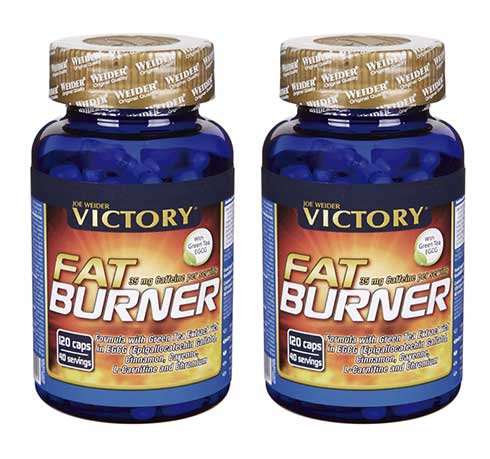
Victory Fat Burner Review – Does it Work?

Updated on January 1, 2022 by Brad Murphy

A thermogenic fat burner that is made by a house hold name. Sounds like a sure fire winner. But when you look at little closer is Victory Fat Burner all that it is cracked up to be?

Victory Fat Burner

PROS
Respected company.
Contains green tea and capsicum.

CONS
Dosages are on the low side.
Some Unusual ingredients.
No money back guarantee.

VERDICT- NOT RECOMMENDED
Victory Fat Burner contains some good ingredients, like green tea and capsicum, but there are also ingredients that have more debatable value, such as mustard powder and cinnamon.

There are also questions about the quantity of some of the better ingredients (not enough in our opinion).

The lack money back guarantee is also an issue.

We recommend looking at other products – we have listed our preferred thermogenic fat burners here.

Victory Fat Burner Review

Victory Fat Burner is a fat burning diet pill developed by Weider Global Nutrition. That’s something that gives it extra credibility. Weider is a respected company. In many countries, it’s a household name.

The company was founded in 1936 by the family of the bodybuilding legend Joe Weider and is still going strong 80 years later, so there can be little doubt of its credibility as a dietary supplement manufacturer.

Victory Fat Burner appears to have been dropped from the official website, though, so it could be it was not one of their more successful products.

What is Victory Fat Burner and How Does it Work?

Victory Fat Burner is primarily designed to function as a thermogenic fat burner, but the formulation also improves lipolysis and helps inhibit the appetite.

Provides Thermogenic Fat Burning

Thermogenic fat burners are very popular. The term “thermogenic” refers to the ability to increase thermogenesis within the body.

Thermogenesis is an ongoing process. During life, it’s happening all of the time. 

It’s the process that generates heat within the body. Its’ thanks to thermogenesis that your skin is warm to the touch. Unlike reptiles, humans are warm-blooded and it’s thermogenesis that makes us so.

Certain things increase thermogenesis. Exercise is one of them. That’s why a good work out makes us sweat.

Certain natural compounds increase thermogenesis too. The catechins (antioxidants) in green tea are a good example.

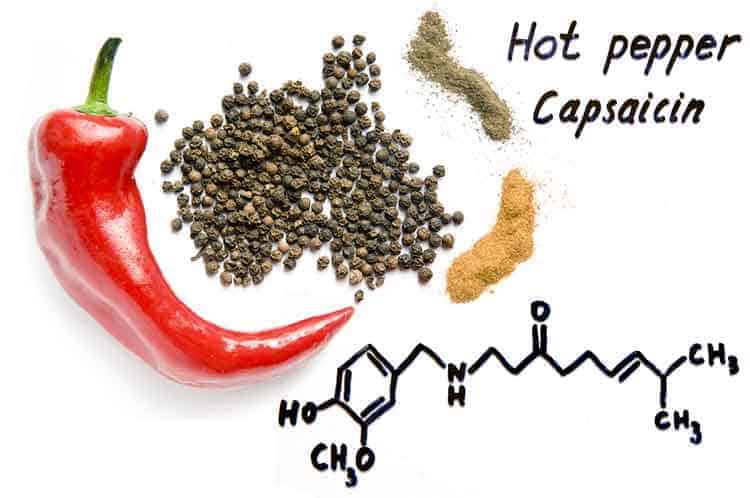
As are the capsaicinoids in red peppers. There is plenty of scientific evidence that proves both of them increase thermogenesis.

Capsimax
Capsaicinoids in red peppers are very effective thermogenic fat burners

Although such compounds do not increase thermogenesis as much as exercise does, the benefits last longer. A good thermogenic fat burner can help you to burn extra calories 24 hours a day.

You burn the extra calories because increasing thermogenesis affects metabolism. It makes it faster and any increase in metabolism entails a corresponding increase in energy usage.

Thermogenesis also causes you to lose energy into the atmosphere. It radiates from the body in the form of heat. 

Increases Lipolysis

Lipolysis is the process the body uses to break down its stores of fat. Many fat burning supplements contain ingredients that aim to improve the process. Victory Fat Burner is one of them.

When lipolysis improves, glycerol and fatty acids are retrieved from body fat more quickly, mobilized, and delivered to the blood. 

Let’s not forget, lipolysis is initiated when the body experiences an energy shortage. Diet pills that improve lipolysis, enhance this natural process and, in so doing, help to counteract feelings of fatigue.

Inhibits Appetite

If you are taking a fat-burning product you are doing so through a desire to burn away your excess fat.

This may be because you are overweight or because you are an athlete or sports person who wants to look their best during an upcoming competition.

You can’t burn fat without restricting your calorie intake, suppressing appetite. That means avoiding unhealthy food options and eating smaller portions at mealtimes. It’s also best to eat no more than three meals per day.

When you eat less your body responds by initiating feelings of hunger. It’s your body’s way of telling you it wants more food and it can be very persuasive.

What begins as a quiet whisper can quickly become a forceful nagging sensation if you continue to ignore your body’s request.

Hunger is unpleasant. It can also be very distracting when you are trying to work, work out, or concentrate on sports or study.

As the nagging gets louder, it gets increasingly easier to give in. If you do, you halt your fat-burning progress in its tracks.

Many people give in to their hunger. That’s why so many fat burners contain ingredients that turn down the volume of hunger and provide ongoing appetite control.

When the appetite is adequately suppressed, you can avoid hunger between meals and also feel satisfied by smaller portions at mealtimes.

What Is In Victory Fat Burner

Each (3 capsule dose) contains:

Green tea extract (570mg)

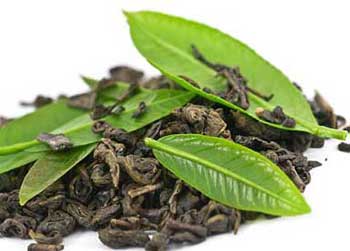
Green tea is a very popular ingredient in fat burning products. Its ability to accelerate fat-loss has been proven again and again.

Green tea

Green tea is a source of caffeine. Apart from being good for boosting energy, caffeine also boosts metabolism and thermogenesis.

However, the caffeine content of green tea is not particularly high. Researchers say green tea’s fat-burning capabilities are mainly due to the unique combination of catechins and polyphenols it provides.

After one study, conducted in Europe, the scientists concluded: ” Green tea has thermogenic properties and promotes fat oxidation beyond that explained by its caffeine content per se.”

EGCG (90mg)

This is an interesting addition to the formulation. Research shows EGCG (Epigallocatechin gallate) is the main fat-burning compound in green tea.

EGCG is a powerful antioxidant. In addition to boosting fat-loss, it also helps rid the body of toxins that can negatively affect the health. 

Cinnamon Powder (105mg)

Although it’s not a particularly popular ingredient, there is some evidence to suggest cinnamon might be good for regulating blood glucose levels and improving insulin sensitivity. This may enable it to ward off carb cravings and sugar urges.

After a meal, blood sugar levels can rise fast. Sensing the sudden elevation in blood sugar, the body responds by instructing the liver to create extra insulin.

As insulin levels increase, blood sugar levels go down. Unfortunately, sometimes blood sugar drops too low. This is known as a blood sugar crash.

When blood sugar crashes, it triggers urges for carbs and other high-calorie foods.

If cinnamon can intervene and prevent this from happening, it can only be beneficial. Unfortunately, study is still in its early stages. There is not enough proof to show this is something cinnamon can do.

Mustard Powder (105mg)

Mustard is a popular condiment that’s often served alongside meat. It’s also a heart-friendly spice that can help lower blood pressure levels and may help reduce the frequency of migraine attacks.

Mustard is known to benefit the health in a number of ways, but it is not normally associated with weight loss.

Grapefruit Powder (50mg)

Grapefruit contains a compound called naringin that is capable of amplifying the effects of caffeine.

Naringin may also improve the metabolism of lipid fats, but further study is warranted.

L-Carnitine (55mg)

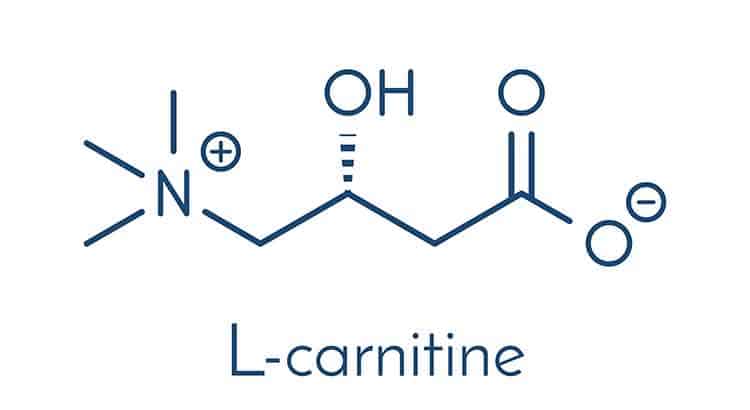
L-Carnitine is an amino acid derivative. Your body can make it from lysine and methionine but there are arguments for taking it in supplement form.

One of the things L-Carnitine does is help with energy metabolism by helping carry fatty acids to the mitochondria in your cells.

L-Carnitine

The mitochondria have the job of burning the fat and putting the released energy to work.

Although there is evidence to suggest supplementation with L-Carnitine may help you to burn extra body fat, it appears to offer the maximum benefit to elderly people.

So, depending on your age, it’s disputable how much value it will offer in this particular fat-burning formulation.

Caienae (20mg)

We are unsure what this ingredient is, but Weider claims it is a form of capsicum annum fruit extract, so it may be a proprietary blend.

Capsicum is a good ingredient. Many of the best fat burning formulations provide it and the compounds it provides have proven fat-burning abilities.

Although it gets the most attention for its ability to help people to burn fat, research shows capsicum is an appetite suppressant as well.

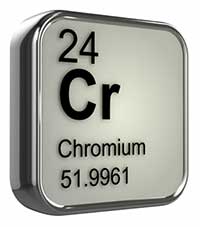
Chromium (40ug)

A mineral that’s become a very popular diet pill ingredient.

Chromium

Scientists originally thought chromium may directly influence fat burning. This is a theory that has now fallen by the wayside, but chromium still has value as an ingredient in a formulation such as this.

Research shows chromium regulates blood sugar and insulin. That’s the main reason supplement manufacturers favor it so much today.

The fact that, the Victory Fat Burner formulation contains chromium, makes the inclusion of cinnamon unnecessary.

When it comes to preventing cravings for sugar and carbs, chromium has a level of credibility cinnamon cannot match at the present time.  

How to Use Victory Fat Burner

You need to take three capsules each day. Weider recommends taking them together, with your main meal of the day.

Needless to say, if you want to get the best from this product you will need to use it alongside an energy-restricted diet and try to get more exercise if you can.

Victory Fat Burner Customer Reviews and Feedback

Customer reviews are hard to tack down. However, we managed to do so and the number of good reviews outweigh the bad.

The people who leave bad reviews tend to offer little explanation of why they are doing so. They just leave brief statements such as “crap” and “doesn’t work.”

Positive reviews tend to be a little longer.

An average comment from a happy customer reads:

“Helps boost energy. Controls my appetite too. It’s not one of the best fat burners I’ve tried but, with diet and exercise, it does help you to lose weight and refine your physique.”

Side Effects & Health Issues of Victory Fat Burner

None of the ingredients have a reputation for causing side effects.

The formulation is unlikely to be suitable for women who are pregnant or nursing a child. 

People who have health problems should always check with their GP before using any brand of diet supplement. 

The same advice is offered to individuals who are taking medication or planning to use two or supplements alongside each other.

If you have any doubts about this product’s suitability for you, we suggest you check with your doctor too.

Where To Buy Victory Fat Burner

You can order it via its official website and also from diet and fitness related websites.

Guarantee

There does not appear to be a money-back guarantee.

Victory Fat Burner Review Summary

Victory Fat Burner contains some good ingredients, like green tea and capsicum, but there are also ingredients that have more debatable value, such as mustard powder and cinnamon.

Such additions are unlikely to contribute any useful weight loss benefits and may dilute the power of the better ingredients.

In a head to head competition with any of the top fat burning products, Victory Fat Burner may struggle to keep up.

The formulation of ingredients is not as good as the ones some of the better alternatives provide.

The dosing regimen also raises some questions. You only take this product once per day. That may not be often enough to deliver maximum fat-burning effects.

The lack of a money-back guarantee is also an issue. The manufacturers responsible for all the top fat-burners provide one. Why can’t Weider do the same?

What we appear to be looking at here is a fat burner that may be okay, but is not one of the best.

Training To Failure – Muscle Soreness and Muscle Failure

Updated on January 5, 2022 by Brad Murphy

Is working out until you can’t work out anymore a good or bad thing? We look at the science of muscle soreness and muscle failure

Muscle Soreness and Muscle Failure

This is part 2 (part 1 here) of Training to Failure – in layman terms… working out until you cannot workout anymore

Context has the final word once again.

Muscle Soreness and Muscle Failure – What Does the Science Say?

Scientific studies have attempted to compare failure and non-failure training and some have done a reasonable job at it.

I won’t slam you with a thousand study references but up until now the picture has looked something like this:

Not everyone is great at judging how close they are to muscle failure, so training to failure is a guaranteed way to ensure you are working the muscles hard enough to elicit growth.

Chronic failure training – as in, going at it every time you hit the gym – however, can cause fatigue which can hinder your overall effort and possibly dull growth.

Failure training is no more dangerous than non-failure training provided any potential problems are mitigated. In other words, it’s not inherently dangerous to train a muscle to failure, but falling over while squatting to failure is (okay that last bit wasn’t sciency).

Some studies have even completely contradicted each other in the past, where one says failure training produces better results while another concludes that it hinders progress.

So, what are we to think from a scientific standpoint?

Recently, a comprehensive study was undertaken.

Over the course of 20 weeks, 10 different training protocols – each one a unique combination repetition design – were performed by the subjects.

Muscle damage and fatigue were measured before each training session and at intervals afterwards, ranging from 6 hours to 48 hours post-workout.

Subjects performed 3 sets of bench press followed by squats. The rep protocol included 5 failure and 5 non-failure designs of different rep counts. The non-failure protocols also ranged in RPE (rate of perceived exertion).

For example, in the failure group, one subject would do 12 reps where 12 were possible. That would be a failure set. This went all the way down to a failure set 4 reps where only 4 were possible.

In the non-failure group, one subject did 6 reps where 12 were possible, another did 5/10, and so on down to one subject doing 2 reps where 4 were possible.

Muscles

Intensities (weight) was matched to the RPE and rep counts.

The results of the study were as expected, but it’s nice to have a quality investigation say as much.

High rep failure sets – particularly 10 to 12 reps – take longer to recover from than sets at 5 to 8 RPE.

Again, that sounds obvious but when you consider that the scientists measured actual physical performance as a follow-up at 6, 24 and 48 hours it bears significance that the higher-rep failure guys had reduced power compared to the non-failure subjects.

So, with that in mind, the longer recovery time could definitely impinge on volume, and therefore gains.

The study shouldn’t be interpreted as saying never do failure sets, but it was the first one to show the recovery over time following failure versus non-failure training and with different RPEs and rep counts to boot.

What would be great to see now is what recovery and progress can be made from 5, 6, 7, 8 or 9 RPE where repetitions are equal and resistance (weight) is the variable.

Training Experience and Muscle Failure

Something I’ve heard a lot is that over time, you have to train to failure more and more to continue seeing progress.

This is generally from people who have been lifting for years, perhaps 10 and over. They are talking about a widely held belief that adding muscle mass and/or making strength increases becomes that much more difficult as you become more and more experienced.

Of course it’s true. The most successful bodybuilders in the world cannot make the same gains as someone who is 6 months into regular lifting.

Training to failure appears to be synonymous with that “extra” that veteran bodybuilders are referring to.


We can’t really look at scientific data and make any meaningful conclusions in the context of lifetime lifters.

At least, I don’t know of any studies that have been able to get guys with a decade or more experience busting iron.

For one thing, the diminished returns from their training would make it very difficult to measure anything in a reasonable amount of time.

So does experience dictate how much you should train to failure? Probably, but I can’t put numbers on it.

A pro bodybuilder probably mixes it in with non-failure training in a way that’s optimal for them as an individual in terms of recovery.

These people are at the apex of their potential for muscle gains and so squeezing fractions of improvement out of their already sculpted muscles probably takes some extreme work.

For regular human beings, experience will matter but then so will individual responses to resistance training.

I know some people who can’t move the day after a gruelling leg workout and others who are back at the gym squatting.

This could be partly due to individual biochemical responses to training, but it can also be because of individual perceptions of effort.

man with muscle soreness

Muscle Soreness and Muscle Failure – Varied Perception of Effort

We’ve established what muscle failure is and it’s pretty easy to understand when you’re lifting weight.

What’s perhaps more difficult is an individual’s perception of how close they are to that muscle failure. Are they 2 reps away from failure? Or is it 3…4?

Some of us are better at it. Since it’s becoming fairly clear that we shouldn’t train to failure every time we train, due to the lengthy recovery process and the potential decrease in performance and volume, how close should we get?

It’s a good question, and one that’s often answered with: go with how you feel.

If you training program is of decent design then your overall volume – provided the intensity is adequate – is the most important factor for progress.

Once you are lifting considerable percentages of your 1RM (i.e. 60% and above), total volume is important.

Volume can be measured in total weight lifted as well as number of sets performed.

If your 1RM on benchpress is 275 lbs then if you take 70% of that and 90% of that you can still perform the same volume with 70% as you do with 90% but your likely to be much less fatigued.

That isn’t to say you should always stick to 70% of your 1RM, the point is more about related to being able to achieve your program’s volume by making the right decisions.

Perhaps later in the week, or on your last session of that exercise before you have a couple days off, you can do some failure sets.

Muscle Soreness and Muscle Failure – Leaving No Doubt

I mentioned earlier in the article that this might be the best reason to train to failure.

Taking the muscle to failure leaves no doubt as to how close you have got to maximal motor unit output and muscle fiber recruitment.

In the very least, it reassures you that you couldn’t have done more even if you tried.

Once again, if you are approaching your total volume for that muscle or muscle group for the week then it won’t hurt to use it.

How Much is Too Much?

I would say if your first sets of a training session are difficult or painful to get through because of residual fatigue/soreness from the previous session, you are overdoing it.

Actually, if it occurs over a sustained period of time, it’s a good sign that you are overtraining in general, along with other indicators like declining performance, psychological distress, sleep disturbance, lack of motivation, deteriorating physique

I and many people have found that soreness level and the length of time it sticks around are great indicators of how suited a program design is to the individual using it.

In my opinion the larger compound lifts like squats and deadlifts shouldn’t be taken to failure often, if at all.

These movement rely on so many muscles and muscle groups that working them to that point is likely to result in your form slipping, and yes, possible injury.

What’s more, given the stress these lifts place on the central nervous system (CNS), particularly the closer you get to maximum single repetition loads, working to failure can have detrimental effects that go beyond the musculoskeletal system.

Muscle Soreness and Muscle Failure – Single-Joint Movements

The single-joint movements, machine and cable exercises are more suited to putting in maximum effort. Once you’ve finished your free squats, for example, taking your legs to the pain cave on the leg press isn’t a bad thing – again, so long as the rest of your training doesn’t suffer.

By no means is it necessary or even advantageous to train to failure every time you go to the gym. Employed correctly it can be a useful addition to your program.

There are lots of options open to you as well. No-one is telling you (they shouldn’t be anyway) to do a specific number of sets to failure within a workout.

People often use it on their last set of a particular exercise. They might even combine it with a big drop set where they reduce the weight by about 30% after reaching failure and then go again, repeating the process once or twice more.

Going Beyond Failure

Muscle failure doesn’t even stop some people. They go beyond that point by performing spotter-assisted repetitions; forced and negative reps.

Forced reps are those which a spotter helps you complete after you have reached the point of muscle failure on your own. It’s a bit like reducing the weight but without even the pause it would take to do so.

Negative reps also require a spotter, and sometimes more than one.

These are traditionally done with weight that is heavier than the lifter can actually lift with the concentric – or positive – portion of the repetition.

It works after concentric failure as well because it’s more or less the same thing. The spotters help you lift the weight on the positive and then allow you to perform a controlled negative.

Either one of these options are ways by which you can go deeper into the pain cave. The value of them can be debated all day long, as can regular failure sets.

Main Takeaway Points

I think the moral of the muscle failure story can be summed up with the following points:

Training to failure is relatively safe, provided it does not lead to dangerous practices (like back squatting to failure away from the power rack).

It is not, however, essential to make muscle growth gains, neither is it fore strength improvements – at least not in the first few years of training.

Including some failure sets will help guarantee you are recruiting maximum motor units and muscle fibers, but this can probably also be achieved if you leave a couple reps in the tank provided you have an accurate perception of how many you have left.

Too much failure training will inhibit your ability to complete weekly volume, which is arguably more important for progress than failure sets anyway.

Strategic timing of failure sets – such as in the last few sets of your weekly volume, or before a couple days rest will help limit any negative impact they have on your overall volume and frequency

Closing Remarks on Training To Failure – Muscle Soreness and Muscle Failure

If you’re befuddled by the amount of information coming at you and you’re still not sure whether failure sets are good for your gains or not then join the club.

No-one can tell you for sure, but the science is getting better at zeroing in on the issue.

Research, bro-science, anecdotal evidence, observations, and whatever else has issued from the mouths of the wise and weird, has shown that muscle failure still has a place in a rounded training program.

Some scientists found that it enhances the production of growth hormone following a workout. Other studies show a benefit in terms of hypertrophy.

Bodybuilders have done it for years, and given the literal weight of their opinion, you’d be hard pressed to tell them they are wrong.

And if nothing else, sometimes smashing an exercise until the muscle is well and truly murdered…well, it just feels right.

Plus, the pump you get is outrageous.

Modern research is leaning more towards the opinion that it’s almost redundant, especially if it negatively affects your overall training volume…but they also say you might want to add some in just in case, you know, to make sure you’re pushing your muscles as much as you think you are.

Thankfully, there’s nothing specifically saying failure sets are useless or dangerous.

So have at it, but remember this: the deeper you go into that pain cave, the longer it takes to find your way out afterwards.

Don’t overdo it, otherwise you’re just wasting time and energy, and that’s something none of is can afford.

How Much Protein Powder Do I Need? For Working Out and Building Muscle

Updated on January 5, 2022 by Brad Murphy

If you lift weights, then of course you use a protein powder shake. It’d be madness not to. But how much protein powder do need?

Protein powder how much and when
A typical protein powder supplement with a scoop – but how much do really need to take?

Protein powder is a sure fire way of getting a good whack of raw muscle building material as and when you need it.

But when should you take it for optimal results? Is the “protein window” that the bro was talking about at the gym a thing?

And, how much should you take for best results, before you’re just pi$$ing money down the can?

Must Read: Build, repair, and recover faster with Crazy Nutrition’s TRI-PROTEIN formula. Made with 6 natural, non-GMO proteins that break down in 3 phases for more energy and strength than regular whey, hemp, or soy protein formulas

I have the answers, or at least the current answers based on the most up-to-date meta-analyses of groups of individual scientific intervention studies…okay?

For the record, most of the studies conducted with protein supplements use whey protein. Now, there are different forms of protein powder, and even different forms of whey.

Some are more beneficial to take before bed because they are absorbed slowly. Some are fast acting and so useful for situations where you have to absorb protein within the next hour or die!

Obviously I’m kidding about the last part, but the point I’m trying to make is that whey protein is used in studies, but you can assume for the most part that other proteins will have close enough results for rock-n-roll.

correct dosage for protein powder for bodybuilders
How much protein powder do I need

Protein Powder – How Much?

One scoop, 2 scoops, 1.5 scoops? How many fudging scoops, man?!

First off, how many grams is the better question because not all scoops are equal in the world of protein powders.

Also, once you know the grams you need and you know how many grams of protein you have in a scoop, you can pretty much just eyeball it.

After all, it’s not your main source of protein for the whole day, which of course is your dietary intake. You cab put some protein powder in your pre workout food or post workout snack.

Protein powder is something of a convenient necessity – it makes life easier and it actually helps you build muscle.

Still, How Much Protein?

The most important thing to get right is your overall protein intake because if you’re not eating enough relative to your workout intensity/volume, it will affect your rate of progress.

Quite a few studies have looked into nutritional protein intake in the context of resistance training (meta-analysis goodness here).

The upper limit for total daily protein intake is about 2.2 grams per kilogram of bodyweight. After that, any gains appear to tail off for even the biggest protein sponges amongst us.

Most people appear to lie in the 1.6 g/kg to 2.0 g/kg range.
So, after much doodling around with numbers, here’s a general rule of thumb to follow:

1. Consume enough protein to make 1.8 grams per kilogram of your bodyweight.

For example: for a 91 kg person (200 lbs), that equates to 163.8 grams of protein from your diet.

2. Then, after your workout or on non-training days, take the following amount of your protein powder, as determined by your bodyweight range:

  • 140 to 169 lbs take 30 grams of protein post-workout
  • 170 to 199 lbs take 35 grams of protein post-workout
  • 200 to 219 lbs take 40 grams of protein post-workout
  • 220 to 250 lbs take 45 grams of protein post-workout

If you are outside these weight ranges then try to consume a total of 1 gram per pound of bodyweight – including your protein supplement – if you do resistance training on a regular basis.

Again, these guidelines are for people looking to put some kind of figure to their “ideal” post-workout protein shake.

In reality you might not know the exact quantity of your total protein intake. However, research tells us that both muscle size and strength are enhanced with post-exercise protein supplementation.

Protein Window – What’s the Deal?

I feel like the protein window argument has gone to the point of absurdity and back so many times that people actually think it’s important.

Logic tells us that downing protein within an hour of a workout should enhance muscle gains.

Protein manufacturers are all over that like flies on sh!t. “Hells yeah, you should down protein after a workout, and for every damn hour you are ALIVE.”

Supplement companies like money, soooo that’s the objectivity safely removed from their stance on the matter.

Back to the logic bit though. There’s no context for the reasoning that necking protein shakes within the one hour, or the half-hour “window” post-workout is necessary/advantageous for optimal muscle growth.

That context is: total protein intake.

Sure if you are low on protein and you bomb a 45 gram protein shake after working out, that protein is going to matter for you gains.

However, if you’ve eaten enough throughout the day to provide an adequate protein pool for your muscles to draw on, the timing won’t make much difference.

In fact, the meta-analysis of the studies conducted on the matter say that strength doesn’t seem affected at all, and only hypertrophy is increased, but only IF the post-workout protein was additional to your regular intake.

So if you’re getting adequate amounts in your diet, including your protein shake then it doesn’t really matter when you take it.

If you are taking a protein shake to make up your protein intake due to working out, then take it within an hour of exercising.

Here’s the bit where I go back and say none of this matters.

For the sake of everyone who enters and re-enters this ridiculous debate: why not just drink your protein after a workout?

Does it take you four hours to get home? Are you incapable of mixing powder and milk/water? Does it stress you out to think about the complexities of shaking a cup after a workout?

Just do it. Who cares? Then, everyone is happy. Maybe different science will turn up one day and tell us we should be drinking it from the second we stop our last rep variation. Who’ll be laughing then?!

LeanFire XT Review – Does it Work? Buying Guide

Updated on January 1, 2022 by Brad Murphy

LeanFire XT is suitable for both men and women to use. It is a dietary supplement that is said to burn fat and increase energy levels. Read the review to see if it is worth buying.

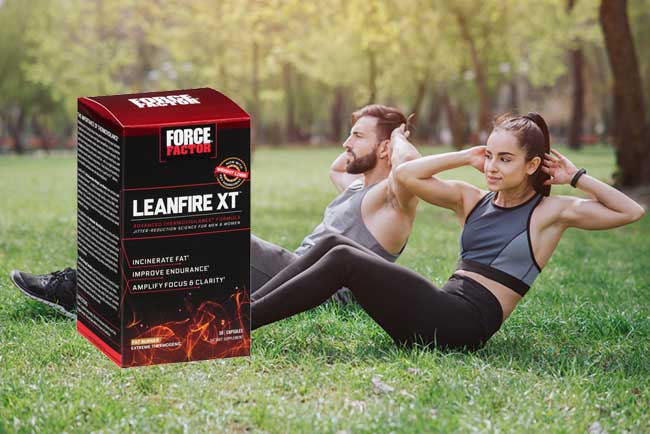
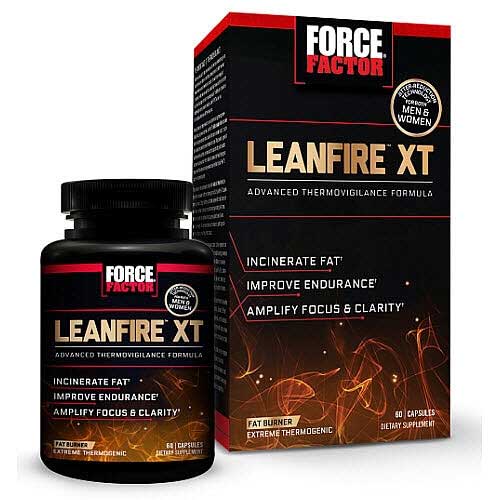
LeanFire XT is advertised as being able incinerate fat, improve endurance and amplify focus and clarity

PROS
Contains ingredients that can increase energy.
Can increase metabolic rate.
Ships to most countries.

CONS
Ingredient quantities not disclosed.
Can cause jitters and nausea.
Some bad customer reviews.
Claims that it can burn body fat are questionable.

VERDICT – OTHERS PREFERRED
LeanFire XT does contain some tried and tested ingredients. It will in all probability it might help you lose weight (increase fat loss) although the science is not as solid as we would like

There are one or two caveats though – you may experience nausea and the jitters. Some customers reviews are bad and less than flattering.

If you are researching a legit fat burner to use I would suggest paying close attention to PhenQ – it is serious diet supplement that is suitable for both men and women.

LeanFire XT Review

In all probability you have been searching online to find a fat burning supplement to use to help you get rid of excess body and achieve a slim and toned body.

You may have bought a weight loss or slimming product in the past – either from a recommendation from a friend or TV commercial.

LeanFire XT form Force Factor is getting some traction – it is being pushed heavily.

Does LeanFire XT work – is it worth buying?

Read this LeanFire XT review to find out!

Advanced Thermogenic Weight Loss Supplement
LeanFire XT – Advanced Thermogenic Weight Loss Supplement

What Is LeanFire XT?

LeanFire XT is a fat burner. The manufacturer says the product beats the alternatives because it supports the “mind-body connection” by delivering cognitive benefits.

It also criticizes other manufacturers for putting too many stimulants in their products.

Does that mean LeanFire XT is a stimulant-free fat burner? (such as Lean XT or LeanBean) Absolutely not. Each pill contains quite a hefty dose of caffeine and has additional stimulants as well.

The promise of weight-loss and cognitive support is put across as being one of the product’s strong points, but it’s a common combination. Most diet pills contain ingredients that sharpen mental focus.

Incinerate fat, improve endurance, amplify focus and clarity!

Who Makes LeanFire XT?

LeanFire XT is part of a line of sports supplements made in the USA by Force Factor LLC.

The company is based in Boston and has been around since 2009.

It was founded by a couple of former Harvard University rowers who were disappointed with the kind of supplements available at the time and thought they could do better.

Lots of other supplement companies claim to have similar histories. 

However, Force Factor supplements appear to have earned the respect of several fitness experts and athletes including the swimsuit model Atilla Toth and noted calisthenics expert Frank Medrano.

What are the LeanFire XT Benefits

LeanFire XT says customers using LeanFire XT can expect three main benefits:

  • Improvements in endurance
  • Increases in focus and clarity
  • Fat incineration

How LeanFire XT Works

Like every other fat burner on the market, LeanFire XT contains ingredients that boost metabolism and thermogenesis. It worth knowing exercise does both these things too.

That’s why a combination of a low-calorie diet and exercise is such a good way to lose weight.

When people talk about metabolism and weight loss they are referring to the processes the body uses to extract energy from food and then put it to work.

Metabolism
Metabolism is the process by which your body converts food and drink into energy.

Metabolism also governs fat storage and fat burning within the body.

When you increase metabolism via exercise, using supplements, or both; it causes your body to burn more calories of energy per day.

Thermogenesis is the process that keeps your body warm. Be it due to exercise or the use of supplements, when thermogenesis increases, you lose extra energy into the air in the form of heat.

The LeanFire XT formulation also provides stimulants and other ingredients that can boost energy levels and provide extra endurance.

The presence of these ingredients should help prevent diet-related fatigue.

Their presence will also make it easier to exercise on a low-calorie diet if you wish to do so.

Stimulants also improve attention and mental focus. Again, this is something you may appreciate if you have a workout to do or fancy hitting the track.

Correct Dosage and Other Usage Considerations

The correct dose is one capsule, two times per day. You need to take the doses 30-60 minutes before the two largest meals of the day.

It’s important not to take the second dose too late in the day. The manufacturer suggests a gap of at least four hours between taking it and going to bed.

Needless to say, this is not a magic pill. If you want to lose weight, you will still need to focus on keeping your energy intake low and get plenty of exercise if you can.

Force Factor fails to mention this in the marketing material but LeanFire XT will not be suitable for women who are pregnant.

Nor will it be a safe option for women who are nursing a child.

As with any other weight management supplement, if you have any health problems you will need to check with your doctor before using LeanFire XT.

It’s equally important to do so if you would need to use the supplement alongside medication. 

LeanFire XT Ingredient Profile

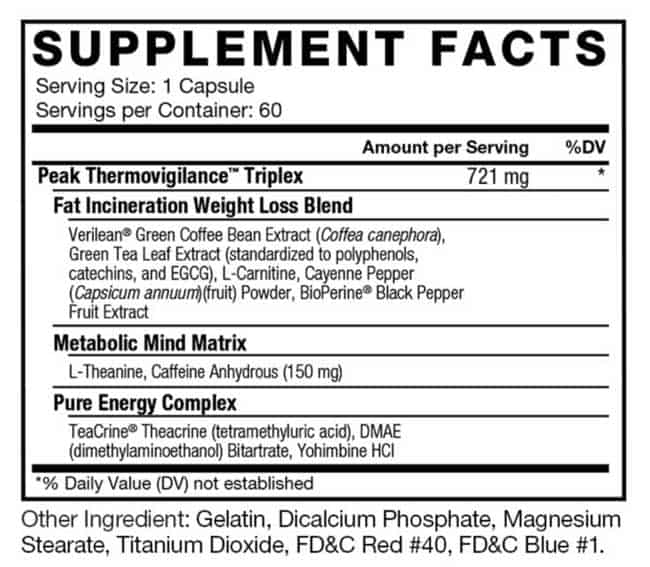
Each LeanFire XT capsule provides 10 ingredients.

what is in LeanFire XT - supplement label

They have a combined weight of 721 mg. Force Factor states 150 mg of the weight comes from caffeine anhydrous but does not divulge any other inclusion rates.

The 10 ingredients are grouped into 3 proprietary blends.

  • Fat Incineration Weight Loss Blend: Green Tea Leaf Extract, Cayenne Pepper Powder, Verilean, L-Carnitine, Bioperine
  • Metabolic Mind Matrix: Caffeine Anhydrous (150 mg), L-Theanine
  • Pure Energy Complex: TeaCrine, DMAE, Yohimbine

Ingredient Potential

1. Green Tea

Green tea is as good for your health as it is for your waistline. The “catechin” antioxidants it provides purge the body of toxins and promote good health in several other ways as well.

Diet pill manufacturers often include green tea in their weight loss formulations and not without good reason. There’s an abundance of research data that shows green tea is a fat burner that gets the job done.

Green tea helps your body to burn fat because it increases thermogenesis and metabolism and data shows it may keep working for up to 24 hours.

2. Cayenne Pepper

Research proves cayenne is another natural fat burning ingredient that works. It appears to do this in a number of ways.

One of the things it does is increase energy expenditure by causing thermogenesis in the body’s brown adipose tissue.

3. Verilean 

Verilean is a brand of green coffee bean extract. It offers a standardized potency of chlorogenic acid but, other than that, probably differs little from standard extracts.

Chlorogenic acid gets quite a lot of attention for its fat-burning capabilities but there is a lack of study to support its use in this way.

Diet pill manufacturers still use it because it supports a healthy balance of blood sugar and insulin.

4. L-Carnitine

Although some research shows L-carnitine may fight depression and improve the mood, it’s probably got better credentials for fighting fatigue.

5. Bioperine

Bioperine is a black pepper extract. It’s standardized to provide a potent dose of piperine.

There are alternative black pepper extracts but Bioperine is the best.

Piperine is the alkaloid that gives the pepper its smell. Manufacturers add it to supplements because it increases the bioavailability of other ingredients

6. Caffeine Anhydrous (150 mg)

Caffeine is a stimulant that acts on the central nervous system in a way that provides extra energy, helps clear the mind, and improves focus.

Research shows caffeine also boosts metabolism and thermogenesis.

This gives it additional value as a weight loss aid.

Caffeine anhydrous is a highly-refined ingredient.

The body absorbs it faster than the caffeine you get from drinking a cup of coffee and the amount provided here is similar to what you’d get by drinking 1 ½ cups.

Most people will probably be okay with this much caffeine, but some people will not.

If you are sensitive to stimulants, the presence of caffeine will make LeanFire XT an unsuitable diet pill choice.

7. L-Theanine

Although it’s added here as a separate ingredient as well, L-theanine is an amino acid that’s in green tea.

It’s often used alongside caffeine because it tempers it and reduces the likelihood of jitters and other caffeine-associated side effects.

8. TeaCrine

TeaCrine is a branded form of theocrine.

Like caffeine, it’s a stimulant but it’s gentler on the body than caffeine is and less likely to cause negative issues.

9. DMAE

DMAE is a compound your body produces. It’s also present in fatty fish such as sardines, salmon, and anchovies.

It’s sometimes added to smart drugs because it may encourage the body to manufacture more neurotransmitters.

Possible DMAE benefits include better memory function, improvements in mood, and enhanced athletic performance.

However, DMAE is also associated with a number of side effects including headaches and mental confusion.

10. Yohimbine

Yohimbine comes from the bark of an African tree.

It’s a stimulant that allegedly supports weight loss but scientific opinion about its abilities is mixed. Bodybuilders favor yohimbine because it may stimulate muscle growth.

LeanFire XT Customer Reviews

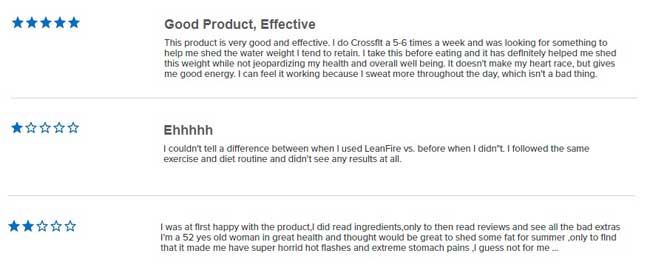
LeanFire XT has a lot of customer reviews and opinions differ a lot.

Some people praise its fat-burning ability, others cry foul at the marketing claims and say it doesn’t work. Many customers also report experiencing side effects.

Here are a few sample comments:

LeanFire XT customer comments
Customer comment for LeanFire XT. Feedback is mixed. For every good review there seems to be a negative one

Known Side Effects of LeanFire XT

A disconcerting number of customer reviews mention side effects so the best course of action is to check with your doctor before using this product.

Some of the side effects customers report include:

  • Headaches
  • Jitters
  • Racing heart
  • Insomnia
  • Running nose
  • Nausea
  • Stomach cramps
  • Hot or cold flushes

Where to Buy LeanFire XT

LeanFire XT isn’t a difficult product to buy.

If you live in the States, you’ll probably be able to pick up a bottle at your local GNC store.

If you prefer to buy online, a quick internet search should reveal many suppliers, but your best bet is to go straight to Amazon.com.

At the time of this review, the Amazon price was under USD $30 per bottle. Other suppliers were still selling it at the RRP, which is considerably more (USD $69.99).

Amazon also appears to be Force Factor’s favorite marketing partner because the company website sends interested parties straight to its Amazon store.

There are 60 capsules in a bottle. That makes each one good for a month.

If you are only paying USD $30 per bottle, the price is not bad but here’s the stinger: Force Factor doesn’t offer a money-back guarantee.

LeanFire XT Review Conclusion

Despite the lack of inclusion rates, a look at the formulation suggests this product should do the things it aims to do.

It contains several good fat burners and so many stimulants it would be surprising if it didn’t work.

A few of the ingredients have less clear-cut value but unless the inclusion rates are incredibly high there presence should be sufficient to dilute the more credible inclusions.

Unfortunately, the formulation appears to hit some people with side effects. That’s not entirely surprising.

Although Force Factor criticizes other manufacturers for using too many stimulants, it appears to be doing the same. Many of the side effects customers report could easily be attributable to caffeine.

Although a lot of people seem to use this product without issue an even rate it highly, there are better options available and, if you go with one of the top-rated products, you will have the benefit of a money-back guarantee.

FAQ’s

Dows LeanFire XT cause side effects?

There have been reports of some users experiencing nausea and the jitters. You should always follow the manufacturers usage instruction and you do experience side effects stop taking straight away.

Can you buy LeanFire XT in Canada?

It is available to order online form the official website or a third party stockist such as GNC or Walmart.

Where is the cheapest price for LeanFire XT?

Currently GNC has the best offer at $69.99 for a months supply which is one bottle.

Dianabol (dbol) Review – Results, Cycle for Bodybuilders

Updated on June 28, 2021 by Brad Murphy

Dianabol is a steroid that is used by some bodybuilders and athletes in an attempt to increase muscle growth. Dianabol is not injected – it comes in a pill. In fact, it’s the most popular orally taken muscle-building steroid in existence.

Is Dianabol worth using

Dianabol Review – Dbol Review

Dianabol is a branded version of the anabolic steroid Methandrostenolone. It’s also one of the most popular orally take anabolic steroids of all time.

This article is describing Dianabol – it’s uses, it’s history and it’s complications. We are not providing any link to buy Dianabol nor are we condoning its use in the bodybuilding industry. Dianabol and Dbol are one and the same. We advise using a Dbol alternative

Although there is an injectable version of Dianabol as well, most users prefer to take it by mouth.

Dianabol was developed in the late 1950s and its ability to provide rapid gains in muscle mass made it an instant hit with bodybuilders. To this day, it remains a popular option with bodybuilders who wish to bulk up fast.

Dianabol bulking up
Dianabol is one of the most popular bodybuilding supplements

A Short Dianabol History Lesson

It was created in the 1950s by the American physician John Bosley Ziegler. It was originally used for boosting the testosterone levels of people suffering from hypogonadism.

During the 1960s, Ziegler decided to give the American weightlifting team an extra competitive edge at the Olympics. He used his creation to do it. As it turned out, his efforts were wasted because the team from the Soviet Union still won.

However, the American athletes were quick to notice using the steroid was making a difference to their training efforts. Thanks to Dianabol, getting bigger and stronger had become a lot easier.

It wasn’t long before Ziegler discovered some athletes were using up to 20 times the normal dose. This made him regret his earlier experiments, but the damage was done. Dianabol had become a key player in the Golden Age of Bodybuilding.

Dianabol remains a popular steroid to this day, despite the fact that it’s an illegal controlled drug.

BodyBuilder on Dianabol
It’s possible to deliver Dianabol to the body via intramuscular injections but most bodybuilders prefer to take a Dianabol pill

How Dianabol Works

One of the most important things it does is improve protein synthesis. It also boosts nitrogen retention and that’s important too.

Protein synthesis is the process where the amino acids brought to the muscles by the blood are put to work. It’s a fancy way of referring to the muscle building process.

The thing is, this “anabolic” muscle building process needs nitrogen as well as protein (amino acids). In fact, the more nitrogen there is, the more efficient the muscle building process will be.

By improving protein synthesis and nitrogen retention in the way that it does, Dianabol creates the perfect environment for maximum muscle growth.

How to Use Dianabol

It’s possible to deliver Dianabol to the body via intramuscular injections but most bodybuilders prefer to take a Dianabol pill. The preference is mostly due to the fact that the steroid is not fully broken down by the digestive process.

Bodybuilders who use this steroid often take 30-50mg per day and use it in a cycle of 4-6 weeks. However, Dianabol has quite a short half life (3-5 hours). That makes it necessary to split the dose over the course of the day.

In order to avoid the risk of stomach upsets, it’s generally best to time the doses to correspond with meals.

Some people don’t favor this method of using the steroid. They take the full daily dose at once instead and do so prior to their workouts.

Bodybuilders who use Dianabol in this way believe it enables an improved uptake of the steroid. They also argue it boosts performance during their workouts.

It seems likely that this method may provide a higher blood concentration of the steroid while working out. The problem is, taking Dianabol as a single, larger dose places a greater strain on the liver. You only have one of those and it has to last for life, so there’s a lot to be said for splitting the dose.

Dianabol Side Effects

Dianabol can do a lot of good things. There’s no denying the fact. It’s a muscle-building superstar. The thing is, it can do a lot of terrible things to the body as well. In this case, there is no yin without yang and when a steroid goes yang it’s no laughing matter.

Let’s take a look at some of the downsides to be aware of before you consider allowing the Dianabol steroid into your life.

Many Dianabol users report experiencing water retention. Nobody wants to have a lot of puffy flesh covering their muscles, but it’s not a frighting thing. It may be murder on your muscle definition, but water retention isn’t going to kill you.

Sporting a spectacular set of man boobs won’t kill you either, but it’s not a particularly masculine trait. Worrying about selecting the best training bra is a territory better suited to female bodybuilders. So, if you are considering using Dianabol, be aware doing so may leave you feeling a tit.

More worryingly though, Dbol is a steroid that can cause liver damage. This is because it’s a C17-Alpha Alkylated oral anabolic steroid. That means it can be processed by the liver without being destroyed.

Using a liver support supplement like N-Acetyl L-Cysteine may help to some extent. However, before you use a steroid like this you really need to ask yourself if the risk is worthwhile.

Other common side effects include:

  • Acne
  • Greasy skin
  • Aggression
  • Testicle shrinkage
  • Enlarged prostate gland
  • Loss of sex drive/impotence
  • Mood swings
  • High Blood Pressure
  • High cholesterol
  • Hair loss (men)
  • Increased body hair (women)
  • Cardiovascular problems
  • Suppressed testosterone production

Some Common Mistakes When Using Dianabol

A poor understanding of the steroid and it’s potential side effects increases the likelihood of harm.

Here are four of the most common Dianabol mistakes:

  1. Overdosing in an effort to rush the process
  2. Running the cycle for too long
  3. Not using any on cycle support
  4. Not bothering with a post cycle therapy

Dianabol Pros and Cons

Like the characters in a spaghetti western, Dbol can be good, bad, or just plain ugly. The big difference is, it can be all three things at once.

PROSCONS
Better protein synthesisIllegal steroid
Improved nitrogen retentionHas many potential side effects
Reduces fatigueMay cause irreparable liver damage
Increases strengthRequires post cycle therapy
Provides fast muscle gainsCompetition bans
Increases gains in overall massGains can fade quickly
 Bad for the heart
 Safer alternatives available

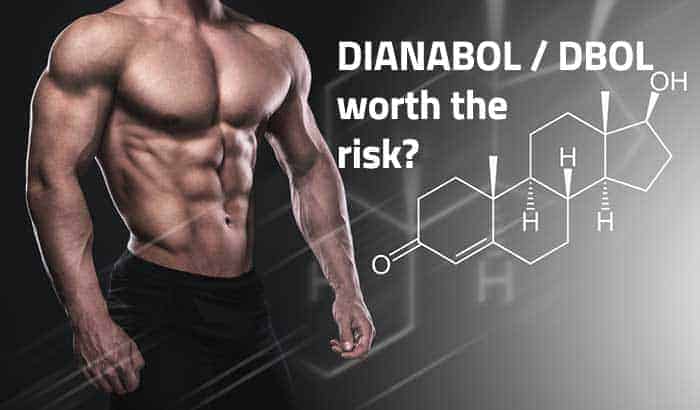
Is Dianabol Worth the Risk?

The power is undeniable, but so are the negative aspects its use can entail.

Unless you really know what you are doing, the potential benefits are not worth the risks involved.

Even if you have experience using steroids and know how to reduce the associated dangers, it’s still a game of Russian Roulette. That’s a game nobody should be playing. It’s pointless.

Nobody’s saying it doesn’t work, but the 60s and 70s are long gone. Steroids have had their day.

The only reason Dbol and the other mighty anabolic dinosaurs are not extinct already is too many people refuse to leave the past behind and move on.

That’s a pity because the supplement industry has evolved. Nobody needs to be gambling with their health anymore. The future is already here and there are better options available.

A Dbol Alternative

The risks are simply not worth it – especially when products exist that can you similar results by using something that is perfect legal and free from side effects.

CrazyBulk have developed a range of legal steroids that have become major players in the supplement industry. Their Dianabol alternative is called D-bal and it can provide the following benefits

  • Massive muscle gains
  • Through-the-roof strength increases
  • Vegetarian-friendly legal steroid
  • Results within 30 days

You can read full review here

CrazyBulk D-bal alternative to Dianabol

Dianabol FAQ

What kind of gains can I expect?

Many users report gains of four to seven pounds within the first week. By the end of a six-week cycle, the total gains are often up to 28 pounds.

However, up to 15 percent of the added poundage may be water weight instead of muscle mass.

Can women use Dianabol?

Women can use it if they want to but it may not be advisable. Dianabol is an androgenic steroid. Women who use it run the risk of developing typical male characteristics such as a deeper voice and increased body hair.

Is a post cycle therapy really necessary?

Absolutely. It’s very necessary. Dianabol shuts down your HPTA (Hypothalamus Pituitary Testicular Axis). That scuppers natural testosterone production for a long time.

You’ll need to do a full PCT to get things back on track. Skip it and any gains you made will vanish fast. There will be a lot of other consequences as well.

What’s the difference between Dianabol and Dbol?

There is no difference. They are both the same thing. Dbol is short for Dianabol.

How long does Dianabol remain detectable?

Despite its short half life, it can remain detectable in your urine and blood for a number of weeks. Some sources say it will be evident for up to four weeks, others say six weeks.

In reality, the exact time will probably vary somewhat from one person to the next.

If you are likely to be subjected to steroid testing, the best thing to do is to stay clear of steroids altogether.

  • « Go to Previous Page
  • Page 1
  • Interim pages omitted …
  • Page 9
  • Page 10
  • Page 11
  • Page 12
  • Page 13
  • Interim pages omitted …
  • Page 19
  • Go to Next Page »

Primary Sidebar

Trending

PhenQ new

PhenQ Review – Multi Action Supplement that Burns Fat and Suppresses Appetite

muscle hypertrophy

Muscle Hypertrophy Explained – Myofibrillar and Sarcoplasmic

Strength Training for Bodybuilders – Starting Out

Training for Strength Gains

Training Specifically for Muscle Size, Mass and Bulk

Bodybuilding is an art, a science, a philosophy and a discipline all in one.

Bodybuilding Basics – Nice Bod, to Magazine Model, to Mr. Olympia

Categories

  • Advice
  • BodyBuilding
  • Ingredients
  • Legal Steroids
  • Male Enhancement
  • Nutrition
  • Pre-Workout
  • Reviews
  • SARMs
  • Sexual Health
  • Testosterone
  • Training
  • Uncategorized
  • Weight Gain – Mass Gainers
  • Weight Loss Supplements

Copyright © 2026 | This website (gghc.org) should only be used as an entertainment and education resource and should not be used to self diagnose or as a medical diagnosis. All information published are the views of the author, contributors and commenters; and do not necessarily reflect the views of this website’s owners. All content written is subject to copyright. All images are licensed or original and should not be used without consent from the owner of the image rights. All videos are copyright. All product reviews are the views of the reviewer and do not necessarily reflect the views of this website’s owners. All advertisements are compensated. There may be affiliation between author and product and some compensation may occur.

  • Privacy Policy
  • Terms Of Service
  • Facebook